

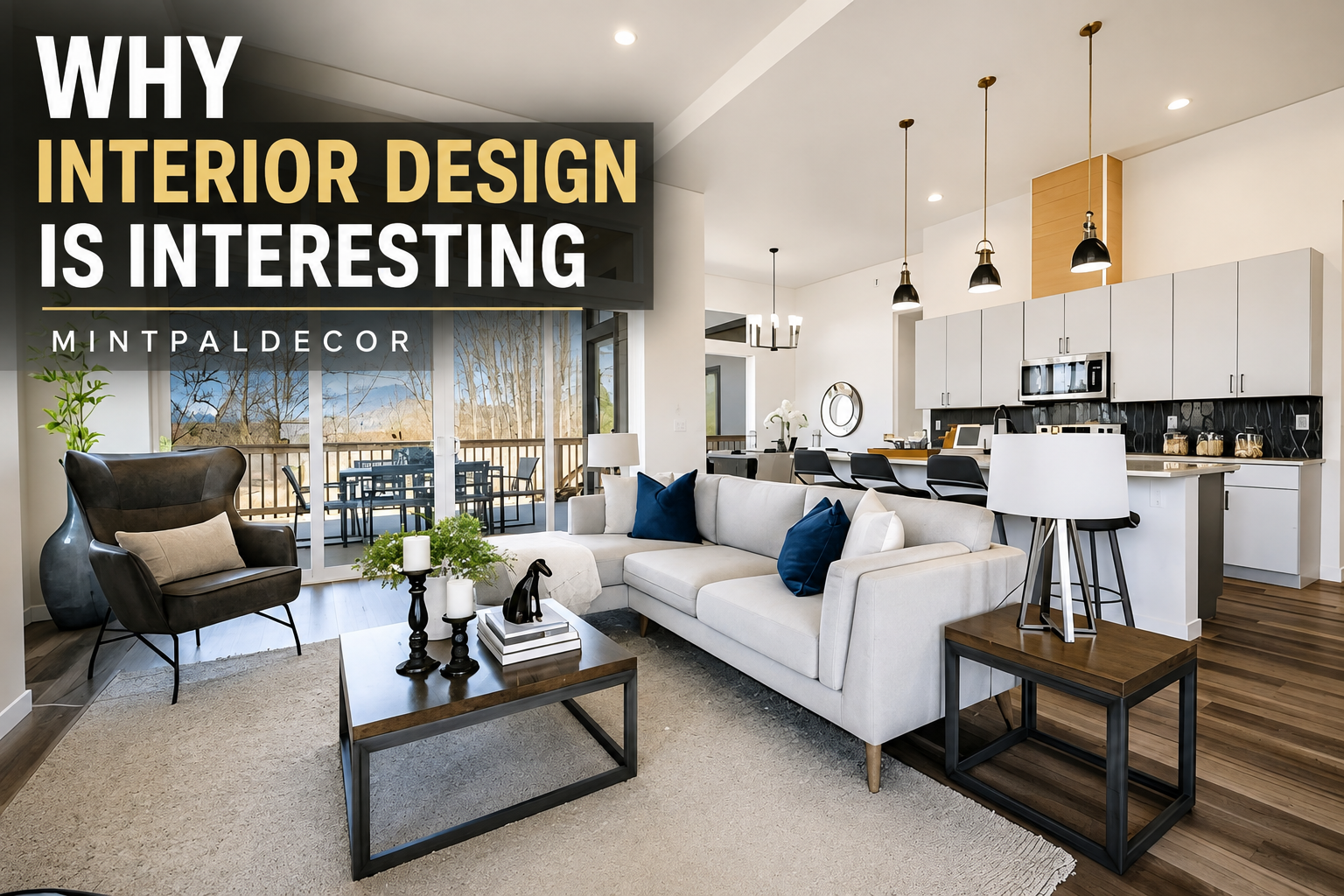
Most people think interior design is choosing paint colors and matching throw pillows. That’s a bit like saying cooking is just turning on the stove.
The real reason why interior design is interesting mintpaldecor goes deeper — and most homeowners in the US never realize how much a room is quietly working on them. The layout of your living room affects how often your family actually talks. The lighting in your home office either kills your focus or sharpens it. The ceiling height in a room changes how bold or cautious you feel inside it. None of that happens by accident in a well-designed space.
At MintPalDecor, we’ve spent years helping people transform ordinary rooms into spaces that genuinely improve daily life — not just look good in photos. This guide covers the real reasons interior design is fascinating, how it affects mood and behavior, what separates good design from great design, and a few things you can apply to your own home today. No fluff. Just the stuff that actually matters.
Why Interior Design Is Interesting:Mintpaldecor’s Short Answer
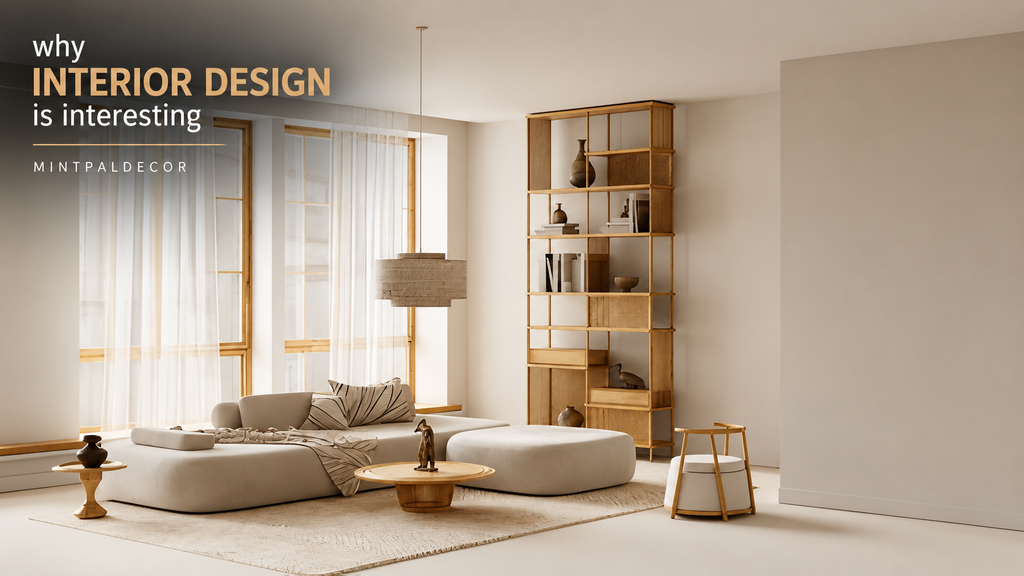
Interior design is interesting because it sits at the intersection of psychology, art, and architecture — and every decision a designer makes either improves or quietly damages how people feel in a space. Color, light, proportion, texture, and layout are not decorative choices. They are behavioral ones.
That’s not an exaggeration. A 2020 study published in the Journal of Environmental Psychology found that room ceiling height alone influences how people think — higher ceilings promote abstract, creative thinking, while lower ceilings encourage detail-focused work. Interior design encodes these effects into the walls around you.
How Interior Design Actually Affects Your Brain
Color Is Not Decoration — It’s Direction
Color psychology is one of the oldest tools in a designer’s kit. Blues and greens lower heart rate and reduce cortisol. Warm oranges and reds stimulate appetite and conversation — which is why so many American dining rooms lean warm. Stark white increases perceived space but can feel clinical without the right textures to soften it.
| Color | Psychological Effect | Best Room Use |
| Soft Blue | Reduces anxiety, promotes calm | Bedrooms, bathrooms |
| Warm White | Feels open, airy, clean | Living rooms, kitchens |
| Deep Green | Grounding, reduces eye strain | Home offices, studies |
| Terracotta | Energizing, social, warm | Dining rooms, entryways |
| Charcoal Grey | Sophisticated, focused | Libraries, workspaces |
A room painted the wrong color for its purpose isn’t just aesthetically off. It’s working against you every day you’re in it.
Light Does More Than Illuminate
Natural light is the single most underrated element in residential design. Homes with well-planned natural light report higher occupant satisfaction, better sleep patterns, and lower rates of seasonal depression — according to research from the Lighting Research Center at Rensselaer Polytechnic Institute.
Artificial lighting layers matter just as much. A room with only overhead lighting feels flat and slightly interrogation-room uncomfortable. Layered lighting — ambient, task, and accent — creates depth and makes a space feel lived-in rather than staged.
What Separates Good Design from Great Design
Good design looks nice. Great design you don’t consciously notice — you just feel better in the room.
The difference usually comes down to three things most homeowners overlook:
Proportion. Furniture that’s too small for a room makes the space feel unfinished. Too large and it feels crowded. The 2/3 rule — where your sofa is roughly two-thirds the length of your rug — is one of those guidelines that sounds arbitrary until you see a room without it.
Flow. How you move through a space is as important as how it looks. Awkward traffic patterns — where you have to walk around furniture to get anywhere — create low-level daily friction that compounds over time. Good designers think about paths first, furniture second.
Negative space. Americans tend to over-furnish. Empty space is not wasted space. It’s breathing room. It draws the eye to what’s actually in the room rather than creating visual noise that exhausts you.
why interior design is interesting mintpaldecor Beyond Aesthetics: The Wellness Angle
This is the part most design articles skip.
Why interior design is interesting mintpaldecor has always emphasized is its direct link to wellbeing. The spaces you spend the most time in — your bedroom, kitchen, home office — have compounding effects on your mental health, productivity, and relationships. This isn’t lifestyle marketing. It’s supported by environmental psychology research going back decades.
| Design Element | Wellbeing Impact | Research Source |
| Natural light exposure | Improves sleep quality, reduces depression | Rensselaer Lighting Research Center |
| Biophilic elements (plants, wood, stone) | Reduces stress by up to 37% | University of Exeter, 2014 |
| Clutter-free spaces | Lowers cortisol, improves focus | Princeton Neuroscience Institute |
| Room ceiling height | Influences creative vs. detail thinking | Journal of Environmental Psychology |
| Warm lighting (2700–3000K) | Promotes relaxation and social bonding | WELL Building Standard |
A well-designed home isn’t a luxury. It’s infrastructure for a better daily life.
Real-World Interior Design: What It Looks Like in Practice
Celebrity homes often become reference points for design trends — not because most of us are working with those budgets, but because they make specific approaches visible. Take jami gertz house as an example: its design blends California warmth with structured elegance, using natural materials and carefully considered scale that translate to real residential principles anyone can apply. The takeaway isn’t the price tag. It’s the restraint — knowing what not to add is as important as knowing what to include.
Simple Design Moves That Actually Work
You don’t need a full renovation to feel a difference. These are low-effort, high-impact changes:
- Swap overhead lighting for floor and table lamps. Instant warmth, zero construction.
- Add a large mirror opposite a window. Doubles perceived natural light.
- Choose one dominant texture per room. Linen, bouclé, wood grain — pick one and let it repeat.
- Raise your curtain rods to ceiling height. Makes every room feel taller, regardless of actual ceiling height.
- Remove one piece of furniture. Most rooms improve immediately with less in them.
For room-specific decoration tips that go deeper, MintPalDecor’s resource library covers everything from studio apartments to open-plan family homes.
Why Interior Design Is Interesting Mintpaldecor’s Take
Here’s the honest version: most people spend more time picking a Netflix show than thinking about the room they’re watching it in. But that room is running in the background of every hour you spend at home — affecting your mood, your sleep, your relationships, your focus.
That’s why interior design is interesting mintpaldecor keeps returning to: it’s not decoration. It’s the design of your daily experience. Whether you’re doing a full home redesign or just rethinking one room, the principles are the same. Light, proportion, flow, texture, and color are tools. Learn to use them intentionally, and your home stops being a place you live in and starts being a place that works for you.
For a broader perspective on how interior design principles apply across different home styles and budgets, MintPalDecor covers it all — from minimalist modern to cozy traditional.
FAQ: why interior design is interesting mintpaldecor
Q: Is interior design only for people with big budgets? No. The core principles — proportion, light, color, flow — cost nothing to understand and very little to apply. A $40 floor lamp and repositioned furniture can transform a room more than a $2,000 sofa in the wrong place.
Q: What makes interior design different from decorating? Decorating is adding things. Interior design is creating a system — where every element (layout, lighting, materials, color) serves a purpose and works together. Decoration is a subset of design, not the whole thing.
Q: How does interior design affect mental health? Research consistently shows that cluttered, poorly lit, and poorly proportioned spaces elevate stress and reduce focus. Well-designed spaces lower cortisol, improve sleep, and support social connection. The effect is real and measurable.
Q: Can I use professional interior design principles without hiring a designer? Yes. Start with lighting layers, remove excess furniture, and choose a consistent color palette. These three moves alone address the most common residential design problems. Resources like designmode24 also offer structured guidance for DIY renovations.
Q: What’s the single most impactful interior design change for a home? Lighting. Every designer will tell you the same thing. Get the lighting right — natural and artificial — and almost everything else in the room improves.
Conclusion
Interior design is not a luxury hobby for people with spare time and money. It’s the craft of shaping how you experience your own life, one room at a time. The science backs it. The psychology backs it. And once you start seeing a space through a designer’s eyes — noticing proportion, light, flow, negative space — you can’t unsee it.
That’s why interior design is interesting. Not because rooms look pretty in photos. Because good design makes real life better, quietly, every single day. Read more about interior design at https://myflashyhome.net/