

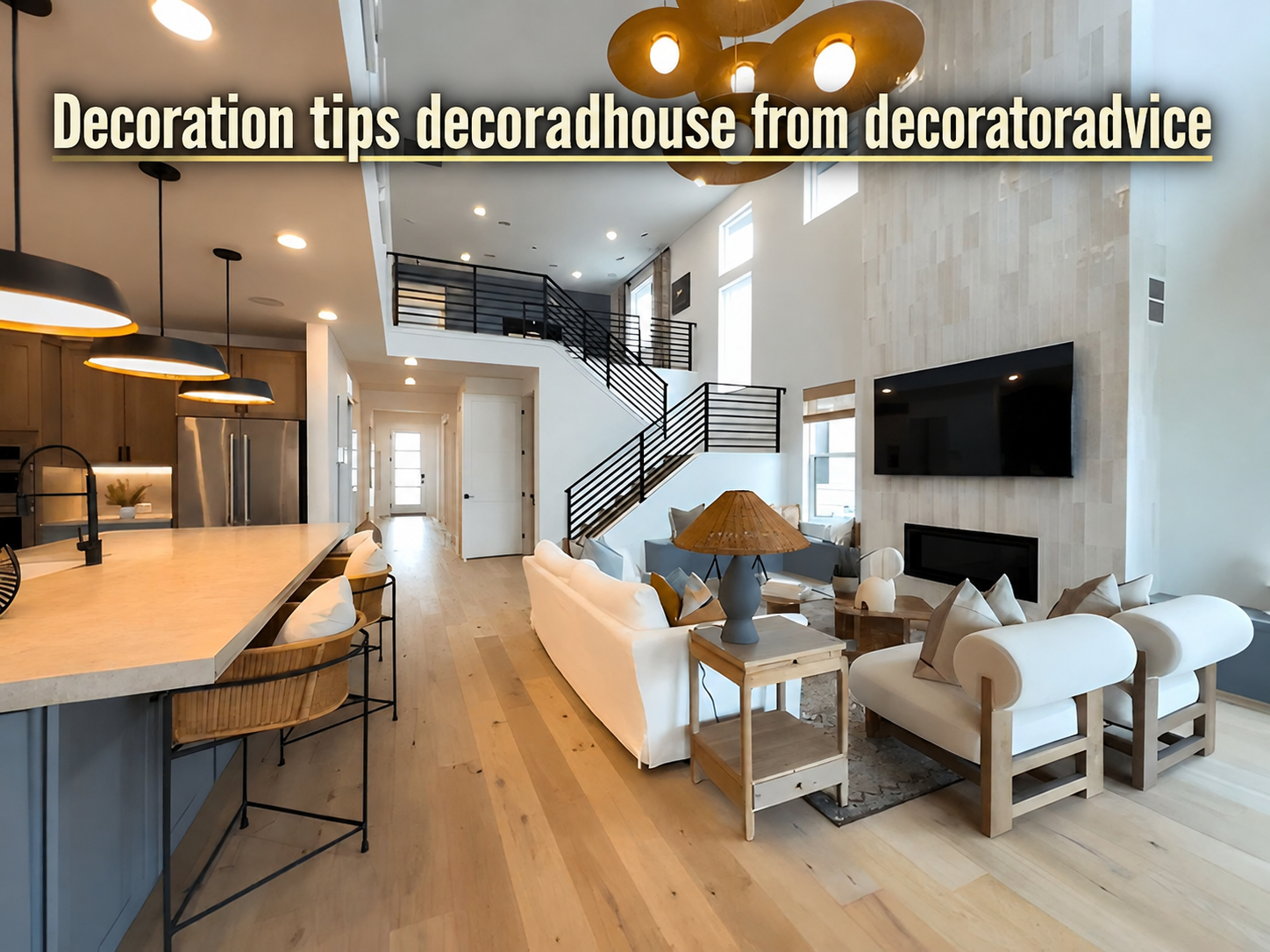
Most rooms don’t fail because of a bad couch or the wrong paint color. They fail because nobody had a plan.
If you’ve ever stood in a room that looks fine on paper but feels off when you’re actually in it, you’re not alone. That gap between “looks okay” and “feels like home” is exactly what decoration tips DecorAdHouse from DecoratorAdvice are built to close.
This guide covers 12 specific, actionable ways to style any room — whether you’re working with a cramped studio apartment in Chicago or a spacious living room in the suburbs of Dallas. Each tip draws from professional interior design principles that real decorators apply in real homes, not staged showrooms. By the end, you’ll know how to choose a color palette that holds together, arrange furniture that doesn’t fight the room, and add the small details that make guests say, “this place feels different.”
No fluff. No filler. Just what works.
Quick-Reference: 12 Decoration Tips at a Glance
| # | Tip | Impact Level | Cost |
| 1 | Start with a floor plan | High | Free |
| 2 | Choose one anchor color | High | Low |
| 3 | Layer your lighting | High | Medium |
| 4 | Use the 60-30-10 color rule | Medium | Free |
| 5 | Scale furniture to the room | High | Varies |
| 6 | Add texture, not just color | Medium | Low |
| 7 | Define zones in open spaces | High | Low |
| 8 | Hang art at eye level | Medium | Free |
| 9 | Group decor in odd numbers | Medium | Free |
| 10 | Keep surfaces 70% clear | High | Free |
| 11 | Use mirrors to expand space | Medium | Low |
| 12 | Refresh with seasonal swaps | Medium | Low |
1. Start With a Floor Plan, Not a Shopping List
Before you buy a single throw pillow, sketch the room. Note where doors, windows, and outlets are. Measure the floor space.
Rooms look cluttered not because of too much furniture, but because furniture is placed without regard to traffic flow. A sofa that blocks the natural path from the door to the kitchen will make a room feel smaller every single day. Fix the layout first — everything else gets easier.
2. Pick One Anchor Color and Build Around It
An anchor color is the one shade that every other color in the room responds to. It doesn’t have to be the boldest color — it just has to be the most deliberate one.
In 2025 and into 2026, deep greens, warm terracottas, and soft navies have been the go-to anchor shades in American homes. Pick yours before you buy furniture, rugs, or art. It saves money and prevents mismatched regrets.
3. Layer Your Lighting (This One Changes Everything)
Single overhead lighting is the fastest way to make a room feel flat and institutional. Every well-styled room uses at least three light sources at different heights:
- Ambient — general overhead light
- Task — reading lamps, under-cabinet lights
- Accent — candles, LED strips, picture lights
Swap a bare overhead bulb for a warm-toned fixture and add one floor lamp. You’ll feel the difference the same night.
4. Follow the 60-30-10 Color Rule
| Color Role | Coverage | Example |
| Dominant (60%) | Walls, large furniture | Warm white, sage green |
| Secondary (30%) | Curtains, rugs, accent chairs | Navy, terracotta |
| Accent (10%) | Throw pillows, art, vases | Gold, black, dusty rose |
This is the ratio professional decorators have used for decades. It works because it gives every color enough room to breathe without competing for attention.
5. Match Furniture Scale to Room Size
Oversized furniture in a small room doesn’t make the room feel cozy — it makes it feel trapped. A sectional sofa that seats eight belongs in an open-plan living area, not a 12×14 apartment living room.
The rule of thumb: leave at least 18 inches of walkway on all main traffic paths and 30–36 inches in front of seating areas. If you can’t do that, the piece is too big.
6. Add Texture Before You Add More Color
When a room feels bland, most people reach for more color. The better fix is usually texture. A chunky knit throw, a woven jute rug, a linen curtain — these add visual depth without making the palette busier.
Texture is what gives a room warmth at no additional visual cost.
7. Define Zones in Open-Plan Spaces
Open floor plans are popular in American homes, but they’re hard to style without zones. Use area rugs, lighting placement, and furniture arrangement to create distinct areas — one for conversation, one for dining, one for a reading corner.
The decoration tips DecorAdHouse from DecoratorAdvice most overlooked by homeowners is this one. A large open room with furniture pushed to the walls feels emptier than a smaller room with a defined layout.
8. Hang Art at Eye Level — Not Where the Nail Is
Art hung too high is the single most common decorating mistake in American homes. The center of a framed piece should sit roughly 57–60 inches from the floor — standard gallery height.
If you’re hanging a gallery wall, treat the collection as one unit and center it at that height. Don’t let the tallest piece decide where everything goes.
9. Group Decor Items in Odd Numbers
Three vases beat two. Five books beat four. Odd-numbered groupings look more natural because the eye can’t immediately find a mirror image — it keeps moving, which creates visual interest.
When styling a shelf or a coffee table, aim for groups of three: one tall, one medium, one low. Vary the materials: ceramic, wood, glass.
10. Keep Surfaces 70% Clear
| Surface | Max Items | What to Keep |
| Coffee table | 3–4 | Tray, 1–2 decor items, remote |
| Kitchen counter | Minimal | Daily-use appliances only |
| Dresser top | 3–5 | Mirror, lamp, 2–3 personal items |
| Bathroom vanity | Minimal | Soap, 1–2 curated items |
Clutter doesn’t come from owning too much — it comes from storing things in the wrong places. Clear surfaces signal a well-organized home even when the closets are packed.
11. Use Mirrors to Make Any Room Feel Larger
A well-placed mirror doubles perceived light and space. Put one directly across from a window to bounce natural light. In a hallway, a tall narrow mirror adds depth. In a small dining room, a large wall mirror can make the space feel twice its size.
This is one of the most cost-effective decoration tips DecorAdHouse from DecoratorAdvice covers — a $60 mirror from a home goods store can do what a $6,000 renovation can’t.
12. Refresh With Seasonal Swaps Instead of Full Redecorations
You don’t need a new room every season. You need a few interchangeable pieces that update the feel without touching the bones of the space.
Swap throw pillow covers. Change the rug. Swap out candle scents and the art on one wall. In spring and summer, lean toward lighter linens and cool tones. In fall and winter, bring in darker textures — velvet, deep wool, matte ceramics.
This is how professional decorators keep rooms feeling fresh on a budget.
Frequently Asked Questions
What is the most important decoration tip for small rooms?
Scale is everything. Choose furniture sized for the actual floor space, keep surfaces clear, and use mirrors to expand perceived depth. One well-chosen oversized mirror does more than three small decorative pieces.
How do I start decorating a room from scratch?
Start with a floor plan, pick your anchor color, then build the 60-30-10 palette around it. Buy your largest furniture pieces first — sofa, rug, bed — and fill in accent pieces last.
How often should I redecorate?
You don’t need to redecorate on a schedule. Seasonal swaps (pillows, throws, a piece of art) every three to four months keep a space feeling current without major cost or effort.
What decoration style is most popular in American homes in 2026?
Warm minimalism — clean lines and uncluttered surfaces paired with natural textures like wood, linen, and stone — is the dominant direction in U.S. homes right now. It’s a pushback against both sterile all-white interiors and maximalist clutter.
Final Thought
Good decoration isn’t about spending more or following every trend. It’s about making deliberate choices — in layout, color, light, and scale — that work together instead of competing.
The decoration tips DecorAdHouse from DecoratorAdvice in this guide are the same principles decorators apply in high-end homes, stripped of the jargon and the budget assumptions. A floor plan and a clear anchor color cost nothing. A well-placed mirror costs less than dinner out. Getting the lighting right costs an afternoon.
[…] Best for: Throw pillows, bedding basics, seasonal decorations […]