

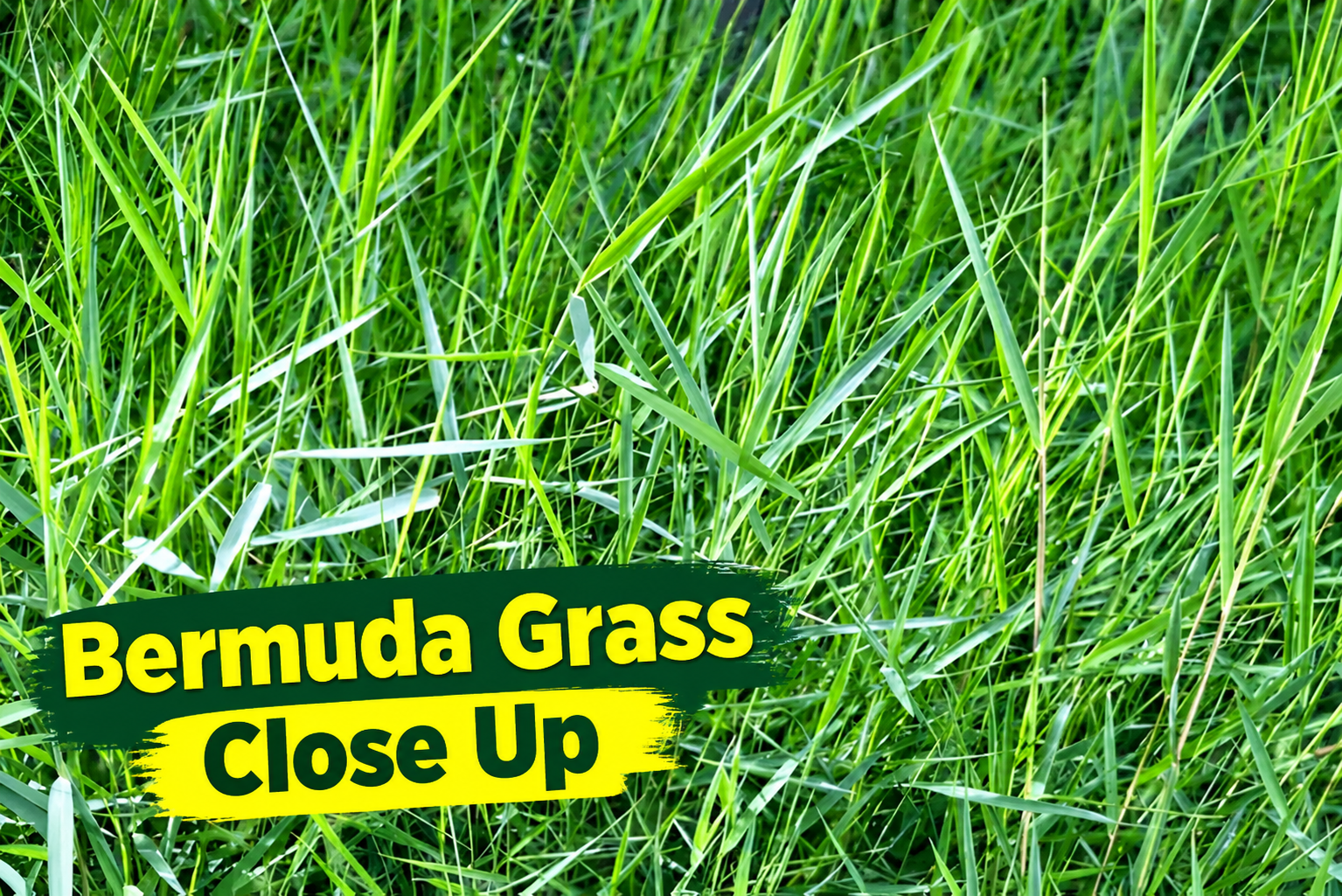
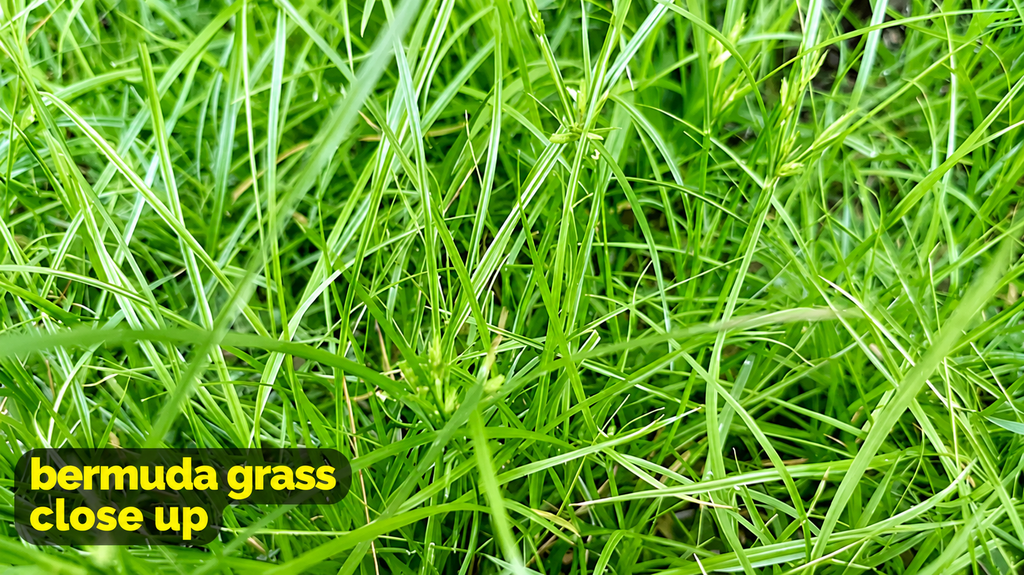
Most lawns look the same from standing height: green, flat, fine. Drop to your knees and that changes. A bermuda grass close up shows narrow gray-green blades, creeping runners that root at every joint, and a seedhead shaped like a small hand with spread fingers. Those details separate Bermuda from crabgrass, zoysia, and centipede, which can pass for each other at a glance.
Getting the ID right matters because the care plans differ. Bermuda wants full sun, low mowing, and regular feeding. Give it shade and it thins out fast. Mistake it for crabgrass and you may spray herbicide on your own turf.
This guide starts with a quick answer, then breaks down blades, stems, and seedheads. After that you get a lookalike comparison table, a five-minute field test, and answers to common questions. A hand lens helps, but a phone camera in macro mode is enough to confirm the grass in your yard.
Quick Answer
For a short description of [what does bermuda grass look like], here it is: Bermuda grass (Cynodon dactylon) is a warm-season turfgrass with fine, pointed blades about 1/16 to 1/8 inch wide. It is gray-green to dark green, has a fringe of hairs where blade meets stem, and spreads by both surface runners and underground stems. Its seedhead has three to seven slender spikes radiating from one point.
Bermuda Grass Close Up: Parts You Can Identify
| Plant part | What to look for | Typical detail |
|---|---|---|
| Blade | Flat to slightly folded, sharp tip, rough edge | 1/16 to 1/8 in wide, roughly 1 to 4 in long |
| Color | Gray-green in common types, deeper green in hybrids | Turns tan after frost |
| Ligule | Short fringe of white hairs at the blade base | Visible with a lens |
| Stolons | Flat, wiry runners above ground | Root at each node |
| Rhizomes | Pale, scaly stems just under the soil | Usually within the top 2 to 4 in |
| Seedhead | Finger-like spikes from one point, often purple-tinged | Appears in warm months |
The runners are the giveaway. Lift one and you will see tiny roots and new shoots at every joint. That is why a small patch can cross a driveway in a single summer.
How Does Bermuda Grass Compare With Lookalikes?
| Grass | Blade | Growth habit | Fastest tell |
|---|---|---|---|
| Bermuda | Very fine, pointed | Stolons and rhizomes | Finger-like seedhead, hair-fringe ligule |
| Crabgrass | Wider, light green | Annual, clumps radiate from center | No rhizomes, dies after frost |
| Zoysia | Stiff, often prickly underfoot | Dense, slow spreader | Blades feel firm, rolled in the bud |
| Centipede | Flat, apple-green | Stolons only | No underground stems |
| St. Augustine | Wide, blunt tip | Thick surface runners | Broad, boat-shaped tip |
If you are also weighing cool-season options, such as in a kentucky bluegrass vs fescue vs ryegrass decision, the main visual difference is season. Those grasses stay green through mild winters, while Bermuda goes straw-colored once soil temperatures fall to roughly 50 to 55°F.
Five-Minute Field Test
- Pull up a runner and check for roots at the joints.
- Hold a blade base under a hand lens and look for the hair fringe.
- Split a young shoot. Bermuda’s newest leaf is folded, not rolled.
- Dig a small plug 2 inches deep and look for pale rhizomes.
- Let a mowed patch grow a week in summer and check for the finger-shaped seedhead.
If three or more match, you have Bermuda. Take a bermuda grass close up photo at each step and compare it against extension-service images.
Where and When Bermuda Grass Thrives
Bermuda is a sun plant. It wants at least 6 to 8 hours of direct light and grows fastest in hot weather. Seed germinates when soil holds around 65°F or warmer. Common types usually do best cut at 1 to 2 inches, and hybrids tolerate lower cuts.
Season changes the picture completely. A bermuda grass close up in January shows brittle tan blades, and the same patch in July looks like a different plant. Always identify it during active growth.
Frequently Asked Questions
Is Bermuda grass a weed or a lawn grass?
Both. It is planted deliberately for sports fields and lawns in hot climates, but it becomes a weed when it invades flower beds, vegetable plots, or cool-season turf.
Why is my Bermuda grass brown in winter?
It is dormant, not dead. Cold soil shuts down growth, and green returns as soil warms in spring.
What is the quickest way to tell Bermuda from crabgrass?
Check for rhizomes and season. Bermuda has underground stems and returns every year. Crabgrass has none and dies with frost.
Does Bermuda grass have a flower?
It produces seedheads rather than showy flowers. The spikes are the feature to look for.
[…] are too hot for Bluegrass to stay green but winters are too cold for warm-season grasses like Bermuda. If you’ve ever wondered what does bermuda grass look like and why it doesn’t work in […]
[…] Answer: Bermuda grass has narrow, gray-green blades (1–3 mm wide) with a pointed tip, a fine-textured dense mat, and […]