

Walk through any garden center and you’ll find bags labeled Kentucky Bluegrass, Fescue, and Ryegrass sitting right next to each other — with almost nothing to help you tell them apart. They’re all cool-season grasses, they all look green, and they all promise a great lawn. The differences, though, are real and they matter.
Plant the wrong one and you’re fighting drought stress, bare patches, or a lawn that goes dormant right when you need it most. This guide breaks down exactly how Kentucky Bluegrass vs Fescue vs Ryegrass differ — growth habit, climate fit, traffic tolerance, and maintenance cost — so you can pick the right seed once and get it right.
Quick answer: Kentucky Bluegrass is best for lush, self-repairing lawns in cold climates. Tall Fescue handles heat, drought, and shade better. Perennial Ryegrass germinates fastest and works well for overseeding or quick fixes. Most premium lawn mixes combine at least two of these.
How These Three Grasses Actually Grow
The biggest practical difference between Kentucky Bluegrass, Fescue, and Ryegrass comes down to how each spreads — or doesn’t.
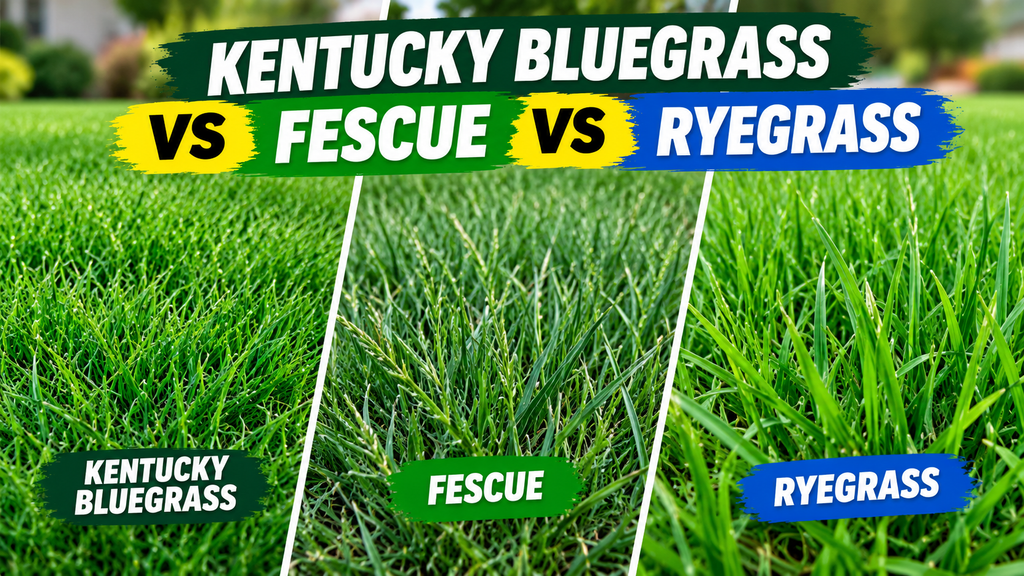
Kentucky Bluegrass spreads through underground stems called rhizomes. This is the reason a Kentucky Bluegrass lawn can fill in bare spots on its own over a season. It’s the self-repairing grass. Fescues and Ryegrass are bunch-type grasses — they grow outward from a central crown but don’t run. A bare patch in a Fescue or Ryegrass lawn stays bare until you seed it yourself.
That distinction alone tells you a lot about which grass fits your situation. High-traffic areas with kids and dogs tend to do better with Kentucky Bluegrass or Tall Fescue because of their recovery ability and durability. Fine Fescue is softer and best left for low-traffic or shaded areas.
| Trait | Kentucky Bluegrass | Tall Fescue | Perennial Ryegrass |
|---|---|---|---|
| Spread Type | Rhizomes (spreads) | Bunch-type | Bunch-type |
| Germination Time | 14–28 days | 7–14 days | 5–7 days |
| Establishment Speed | Slow | Moderate | Fast |
| Self-Repair Ability | Good | Poor | Poor |
| Blade Texture | Fine, soft | Coarse | Fine to medium |
| Color | Dark blue-green | Medium green | Bright green |
Climate Fit: Which Grass Belongs in Your Zone
All three grasses are cool-season, meaning they grow actively in spring and fall and slow down or go dormant in summer heat. But their thresholds are different enough to matter depending on where you live.
Kentucky Bluegrass is the most cold-hardy of the three. It does well in USDA zones 3–7, thrives with cold winters, and goes fully dormant (turns tan) during summer drought rather than dying — then bounces back in fall. If you’re in the northern U.S., the Pacific Northwest, or higher elevations, it’s a natural fit.
Tall Fescue has a wider tolerance range. It handles both cold winters and hot summers better than Bluegrass, making it popular in the transition zone — zones 5–7 — where summers are too hot for Bluegrass to stay green but winters are too cold for warm-season grasses like Bermuda. If you’ve ever wondered what does bermuda grass look like and why it doesn’t work in your yard, that transition zone climate is usually the answer. Bermuda is a warm-season grass with completely different blade structure and seasonal behavior.
Perennial Ryegrass is widely used in mild climates like the Pacific Coast and parts of the Southeast for overseeding dormant Bermuda lawns in winter. It stays green in cooler months but can’t handle prolonged freezes or extreme summer heat.
| Factor | Kentucky Bluegrass | Tall Fescue | Perennial Ryegrass |
|---|---|---|---|
| Best USDA Zones | 3–7 | 4–8 | 5–7 |
| Heat Tolerance | Low | Moderate–High | Low–Moderate |
| Cold Hardiness | Excellent | Good | Moderate |
| Drought Tolerance | Low (goes dormant) | Moderate | Low |
| Shade Tolerance | Low | Moderate | Low |
| Transition Zone Fit | Poor | Best | Poor |
Which Kentucky Bluegrass vs Fescue vs Ryegrass Mix Is Right for You?
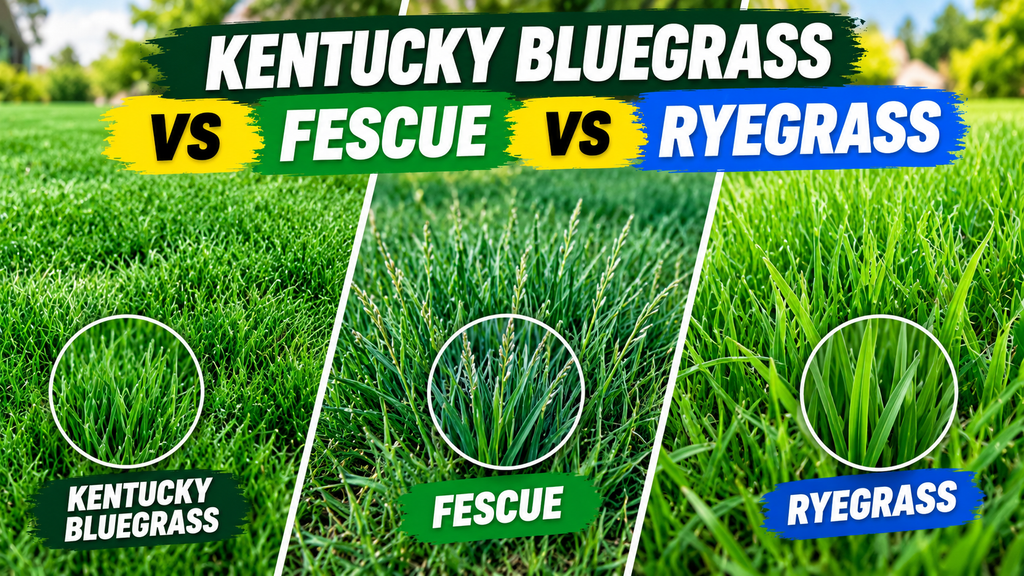
The comparison of Kentucky Bluegrass vs Fescue vs Ryegrass isn’t always an either/or. Many homeowners end up with a mix. Here’s a simple way to think about it by use case:
- Northern lawn, full sun, heavy foot traffic: Kentucky Bluegrass (solo or mixed with Perennial Rye for faster establishment)
- Transition zone, variable shade, dry summers: Tall Fescue
- Overseeding a warm-season lawn for winter color: Perennial Ryegrass
- Shaded backyard, low traffic: Fine Fescue blend
- Sports field or play area that needs to look good fast: Perennial Ryegrass or KBG/Rye mix
Maintenance Differences Worth Knowing
Kentucky Bluegrass is the most demanding of the three. It needs regular fertilization (4–6 applications per year), frequent watering during summer, and careful mowing height (2.5–3.5 inches). The payoff is a dense, carpet-like lawn that looks better than either Fescue or Ryegrass at its best.
Tall Fescue is more forgiving. Deep roots (up to 3 feet) mean it needs less irrigation once established. Mow it higher — 3.5 to 4 inches — to keep the root system healthy through summer. Fertilize 2–3 times per year.
Perennial Ryegrass falls in the middle. It’s easier to establish than Bluegrass, looks good quickly, and needs moderate fertilization. It doesn’t hold up as well through summer stress, which is why it’s often blended rather than used alone.
| Maintenance Factor | Kentucky Bluegrass | Tall Fescue | Perennial Ryegrass |
|---|---|---|---|
| Fertilizer Applications/Year | 4–6 | 2–3 | 3–4 |
| Water Needs | High | Moderate | Moderate–High |
| Mowing Height | 2.5–3.5 in | 3.5–4 in | 2.5–3.5 in |
| Disease Susceptibility | Moderate (Summer Patch) | Low | Low–Moderate |
| Overall Maintenance Level | High | Low–Moderate | Moderate |
Frequently Asked Questions
What is the main difference between Kentucky Bluegrass and Fescue?
Kentucky Bluegrass spreads through rhizomes and self-repairs damaged areas, but it’s slow to establish and struggles in heat. Tall Fescue grows in bunches without spreading, establishes in about half the time, and handles heat and drought far better. They don’t compete well when mixed together — most lawn experts recommend choosing one or the other rather than blending them.
Which grass germinates fastest — Bluegrass, Fescue, or Ryegrass?
Perennial Ryegrass germinates in 5–7 days under good conditions, faster than any other cool-season grass. That’s why it’s often added to Kentucky Bluegrass mixes: the Rye establishes quickly and holds the soil while the Bluegrass fills in over the following months.
Can you mix Kentucky Bluegrass and Tall Fescue?
It’s not recommended. They have different mowing heights, fertilizer needs, and texture — the result tends to look uneven and patchy. If you want a resilient mix, pair Kentucky Bluegrass with Perennial Ryegrass, or use a Tall Fescue and Fine Fescue blend for shadier areas.
Which is better in the transition zone — Fescue or Bluegrass?
Tall Fescue is almost always the better call in the transition zone (roughly Virginia through Oklahoma). Kentucky Bluegrass loses color and quality in the summer heat that transition-zone summers regularly bring. For more visit https://myflashyhome.net