

Walk across a lawn in the northern U.S. in May and you are probably standing on Kentucky bluegrass, whether you know it or not. It is the most common cool-season lawn grass in the region, and one of the easiest to misidentify. From standing height, fescue, ryegrass, and annual bluegrass all pass for it.
People ask what does kentucky bluegrass look like because a wrong ID leads to the wrong mowing height, bad fertilizer timing, and weeds blamed on the wrong grass. The good news is that this grass has a few signatures you can check in two minutes with one blade and a thumbnail.
This guide covers seven identifying features, from the boat-shaped tip to the underground runners. After that you’ll find a lookalike comparison table, a seasonal appearance chart, and short answers to common questions. Pull one plant up by the root and grab decent light before you start.
What Does Kentucky Bluegrass Look Like? The Short Answer
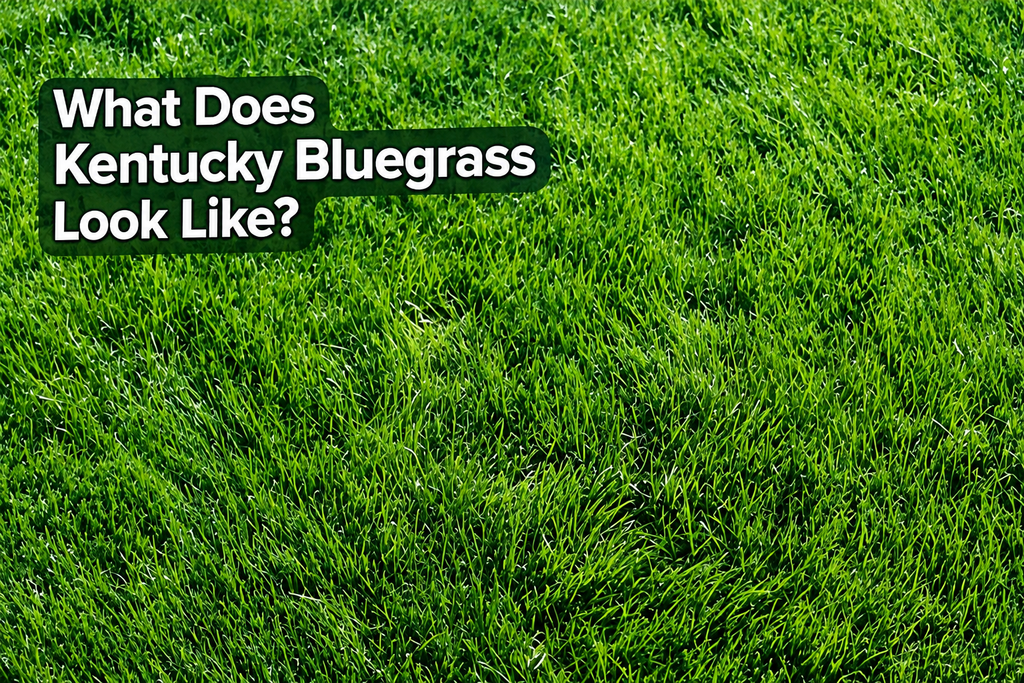
Kentucky bluegrass (Poa pratensis) is a medium-green, fine-textured turfgrass with soft blades about 1/8 to 3/16 inch wide. Each blade ends in a boat-shaped tip and has two faint parallel lines down the center. It spreads through underground stems called rhizomes, which creates a dense, knitted lawn.
The 7 Key Features
1. Boat-shaped (prow) leaf tip
Pinch the end of a blade. It curves inward and closes like the bow of a canoe, rather than ending in a sharp point. This is the most reliable single trait, and it works on mowed grass too.
2. Twin “railroad track” lines
Hold a blade up to the sun. Two thin, translucent lines run parallel on either side of the midrib. Few lawn grasses show this so clearly, so it helps separate Kentucky bluegrass from ryegrass.
3. Blade width and color
Blades are narrow, smooth on top, and usually medium to dark green with a slight blue cast, hence the name. Healthy turf looks even and lush, not coarse or stringy.
4. Folded new leaves
Look at a young shoot from the side. Emerging leaves are folded flat along the midrib, not rolled like a tube. This is hard to see on a mowed lawn, so check an uncut tuft.
5. Short ligule, no auricles
At the base of the blade, where it meets the stem, find the ligule. In this grass it is a short, rounded, whitish membrane about 1 mm tall. There are no clasping “ears” (auricles), which rules out ryegrass and tall fescue.
6. Underground rhizomes
Dig up a small plot. Pale, creeping rhizomes run sideways below the surface and send up new shoots. That is why bluegrass heals bare spots and forms thick sod instead of clumps.
7. Spring seed heads
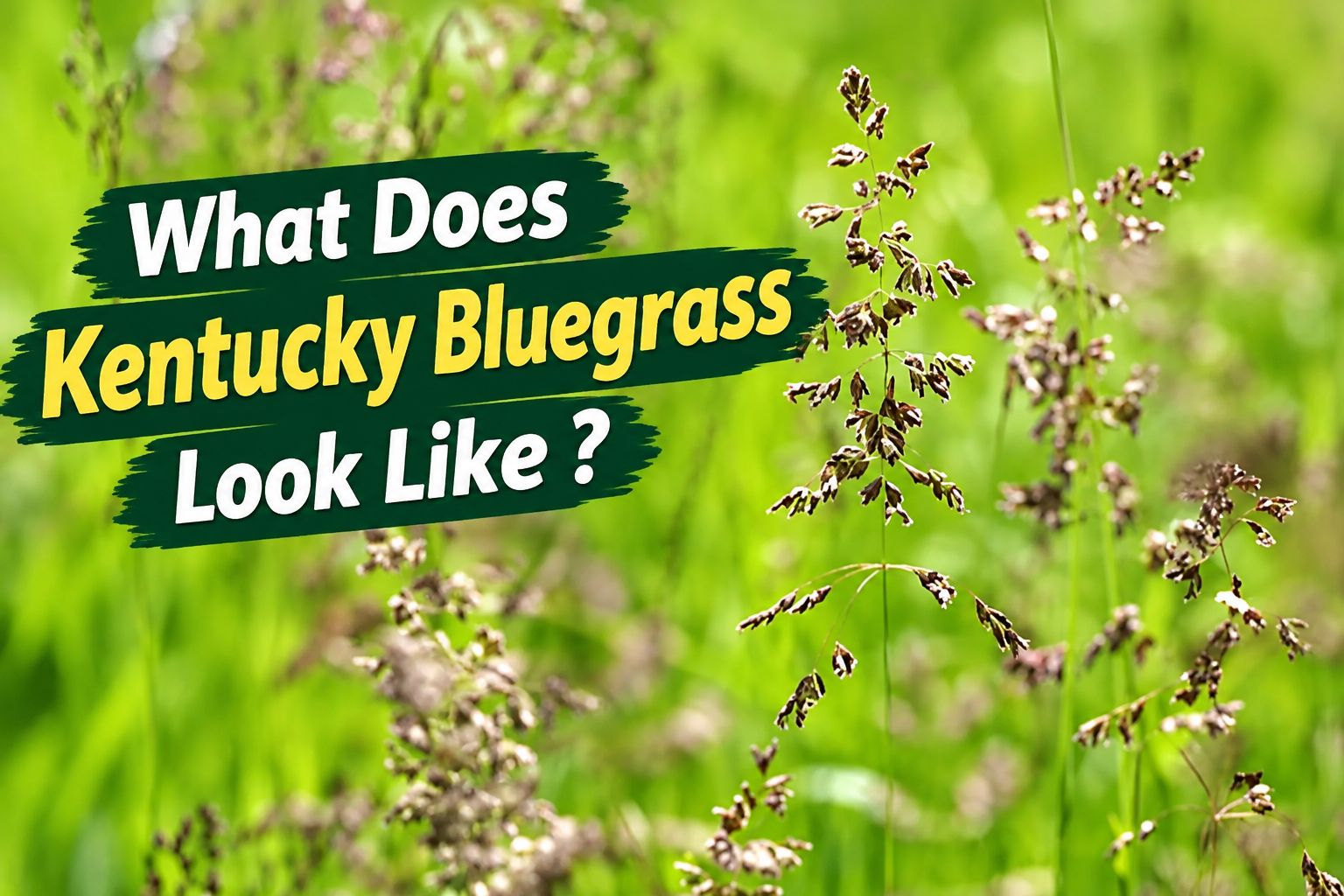
In late spring, stems rise with an open, pyramid-shaped seed cluster (panicle). Seed heads stay pale green to purplish-brown and are only present for a few weeks.
How Does It Compare With Lookalike Grasses?
| Trait | Kentucky bluegrass | Annual bluegrass | Perennial ryegrass | Tall fescue |
|---|---|---|---|---|
| Leaf tip | Boat-shaped | Boat-shaped | Pointed | Pointed |
| Color | Medium to dark green | Light, yellow-green | Glossy dark green | Medium, coarse |
| Growth habit | Spreads by rhizomes | Clumpy, shallow roots | Bunch-type | Bunch-type |
| Auricles | None | None | Present, small | Present |
| Seed heads | Spring only | Nearly year-round | Spike-like | Open, branched |
The trickiest mix-up is annual bluegrass (Poa annua), because it shares the boat tip. Check the color first, then look for seed heads in summer. Kentucky bluegrass rarely shows them by then.
What Does Kentucky Bluegrass Look Like Through the Year?
| Season | Typical appearance |
|---|---|
| Early spring | Greens up quickly; thin, fresh growth |
| Late spring | Peak density; seed heads appear |
| Summer heat | Can thin or go straw-colored if dormant |
| Fall | Strong recovery and rooting; deep green |
| Winter | Goes dormant, tan to brown, but alive |
Cool-season grass behaves very differently from bermuda grass, which thrives in summer heat and turns tan at the first hard frost. If your lawn browns in July but recovers in September, that points to bluegrass.
Growing Conditions That Affect Its Look
Kentucky bluegrass grows best between roughly 60 and 75°F, prefers full sun, and looks best when mowed at 2.5 to 3.5 inches. Cutting shorter exposes pale stems and invites weeds. Thin, bluish-gray turf with a dull sheen often signals drought stress, and a quick footprint test confirms it: if blades stay flattened after you step, the lawn needs water.
FAQs
Is Kentucky bluegrass dark green or light green?
Medium to dark green with a slight bluish tint. Light yellow-green usually means annual or roughstalk bluegrass.
Does Kentucky bluegrass have a pointed tip?
No. The tip is boat-shaped, like a small canoe bow. Pointed tips suggest ryegrass or fescue.
How can I confirm it at home?
Pull one plant. Check for the boat tip, twin lines, short ligule, and a white rhizome. Four matches is a confident ID.
Is it hard to identify from a distance?
Yes. Color and density help, but a close look at one blade settles it.
Final Thoughts
Learning what does kentucky bluegrass look like takes one blade, one root, and a bit of patience. Start with the boat tip and the twin lines, then confirm with the rhizome. If you’re still unsure, your local extension office can usually identify a sample for free or at low cost. Read more about Grass on http://myflashyhome.net/