

You mow on Saturday, and by Wednesday a patch of something coarse and pale is already poking above everything else. Weed, or just a different kind of grass? That question sits behind most failed lawn treatments. Spray the wrong plant and you can burn healthy turf. Ignore the right one and it owns the yard by August.
Sorting out weeds vs grass takes less botany than people expect. Leaf shape, vein pattern, growth habit and how a plant reacts to the mower give most invaders away. Some of the worst offenders, crabgrass included, are grasses themselves, which is exactly why they fool so many homeowners.
This guide shows how to tell the two apart, which weeds turn up most often in US yards, and what actually removes them. The advice follows extension research from two land-grant universities, plus a simple three-day check you can run on your own lawn. Keep your phone handy for close-up photos, because comparing a leaf against the tables below settles most arguments fast.
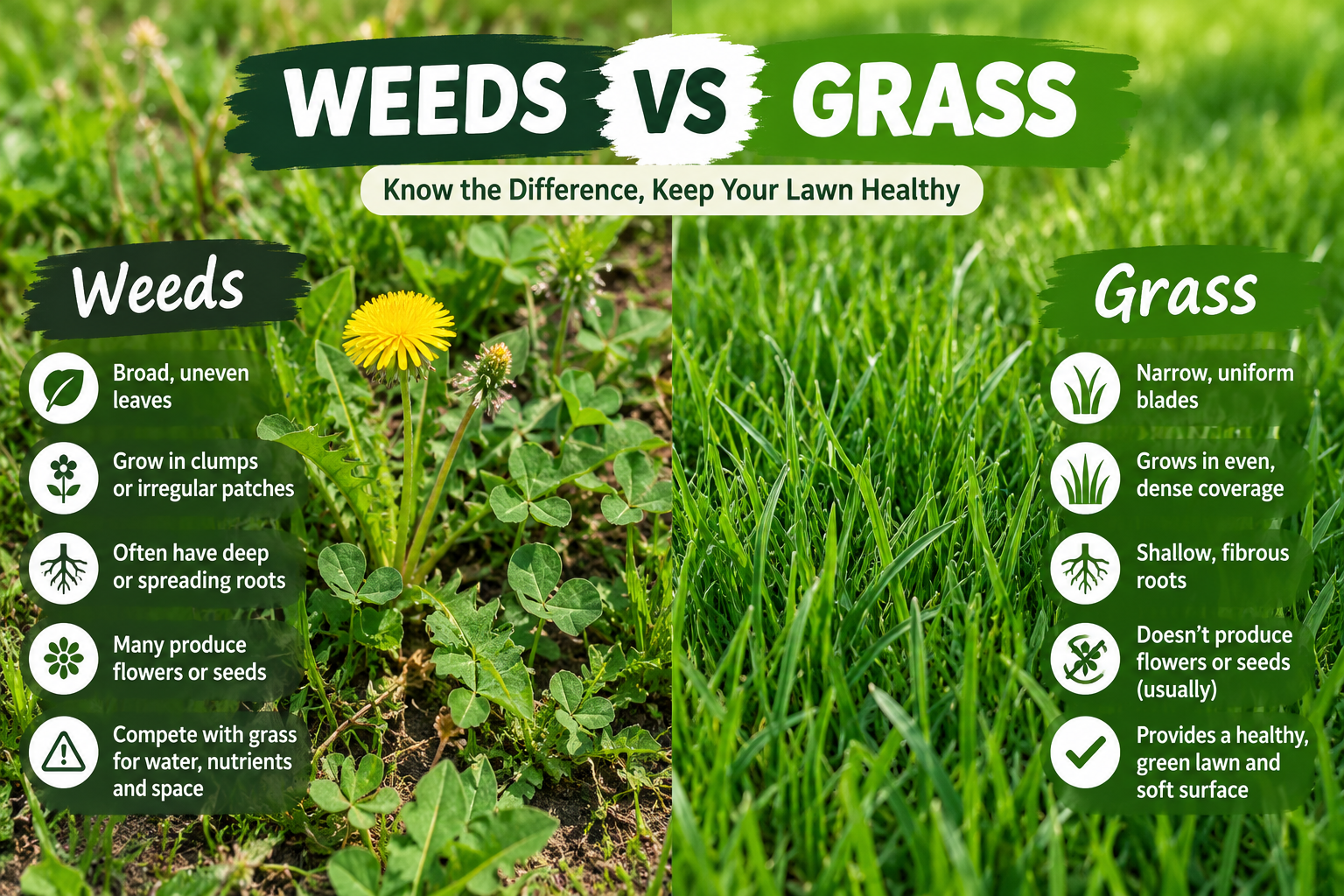
Weeds vs Grass: The Fastest Way to Tell Them Apart
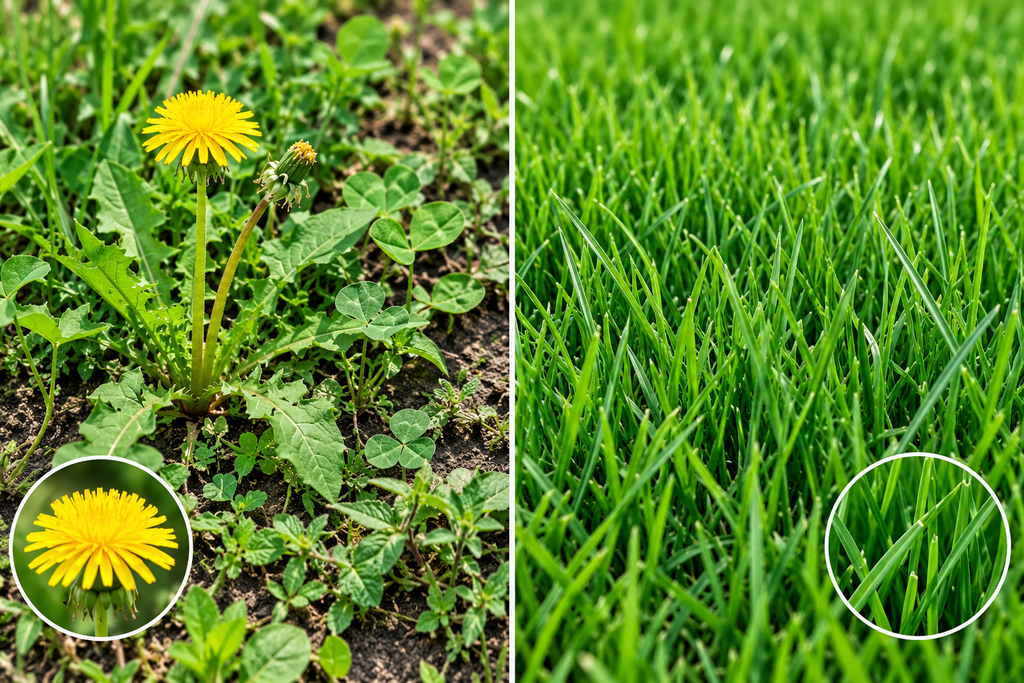
A weed is any plant growing where you didn’t plant it. Lawn grass has narrow blades with parallel veins and grows from the base, so it bounces back after mowing. The clearest difference shows in the leaf: many weeds have wide leaves with branching veins, or spread in a flat mat that slips under the mower.
| Feature | Lawn grass | Typical weed |
|---|---|---|
| Leaf veins | Parallel, narrow blade | Branching net, wider leaf |
| After mowing | Recovers evenly | Regrows fast, or hugs the soil |
| Color and texture | Uniform across the lawn | Paler, coarser or glossier patches |
| Timing | Steady growth | Bursts in one season |
Not every odd patch is a problem. Warm-season bermuda grass turns tan after the first frost and can look dead beside greener neighbors when it is only dormant. Check the calendar before you reach for a sprayer.
Common Lawn Weeds in US Yards
| Weed | How to spot it | First move |
|---|---|---|
| Crabgrass | Light green, low, spreads outward like a star | Pre-emergent before soil reaches about 55°F |
| Dandelion | Toothed leaves, yellow flowers, deep taproot | Dig out the whole root |
| White clover | Three round leaflets, low mat | Feed the lawn, spot-treat patches |
| Nutsedge | Triangular stem, yellow-green, outgrows turf | Use a product labeled for sedge |
Dense turf is the cheapest weed control there is. A thick stand of kentucky bluegrass spreads by underground stems and fills thin spots before weed seeds get light. Most weeds vs grass battles are really thin-lawn problems in disguise.
How to Fix a Weedy Lawn, Step by Step
- Settle weeds vs grass first. Mow, then check again in three days. Plants already towering over the turf, or lying flat under the blade, are your weeds.
- Mow high. Keep cool-season grass at 3 inches or more and never remove over one-third of the blade. Tall grass shades the soil and cuts crabgrass germination.
- Time your pre-emergent. Apply it before soil hits about 55°F. Skip newly seeded areas and do not aerate afterward.
- Remove survivors. Dig dandelions by the taproot and spot-treat sedge.
- Overseed in early fall. Fill bare spots so weeds have nowhere to start.
Still stuck on weeds vs grass? Photograph the plant beside a ruler and match it against the tables above. A close-up usually answers it in one look.
Weeds vs Grass FAQ
Is crabgrass a weed or a grass?
Both. Crabgrass is a grass species, but it behaves as a lawn weed: it is an annual that dies at first frost and leaves bare patches behind.
When should I apply pre-emergent herbicide?
Before soil temperature reaches about 55°F in spring. Skip freshly seeded areas, and do not aerate afterward, since that can break the chemical barrier.
Does mowing higher really reduce weeds?
Yes. Extension guidance recommends at least 3 inches for cool-season lawns, because taller blades shade the soil and cut crabgrass germination.