

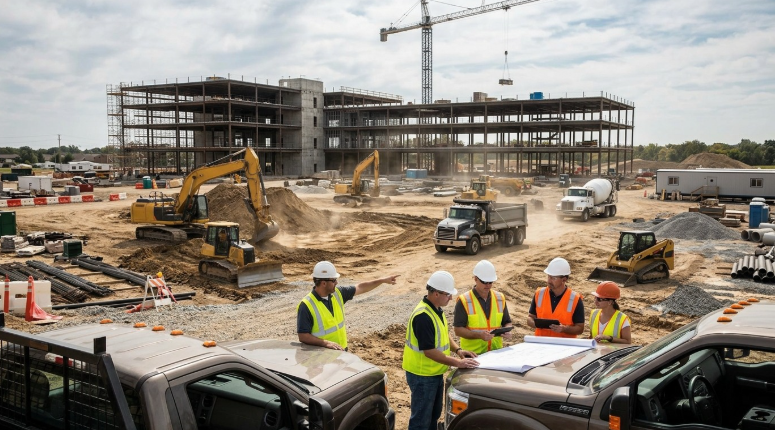
A lot goes into picking the right tools for a construction job, don’t you think? Diggers, lifters, wreckers, and high teachers all play a role in finishing the job faster and with less waste. The wrong equipment can create roadblocks on the job before the first block is in place – or cause unnecessary danger and costs to complete the job properly.
Let’s begin with some of the types of sniper rentals equipment you might find from our inventory with a few of the things to look at if you’re starting out on a new project.
1. Start With A List Of Requirements
First and foremost, before even looking at a machine, you should have a list of the tasks that need to be done to get your project off the ground and moving smoothly along. Maybe it’s a tiny job, one that might only require a couple pieces of equipment (but that seems unlikely!). Or, perhaps it’s an entire commercial enterprise involving scores or hundreds of moving parts. Either way, you need to know where you’re going so that getting the right equipment isn’t too challenging.
You’ll need to know:
- Specific items that need to be moved, removed, installed, or lifted
- Whether land prep is involved
- If you’ll be working indoors or outdoors
- How tight a space you have to work with
- How long the project will take
- Obstructions on the ground, beneath the ground, and overhead
This should narrow down your choices and keep you from overspending by selecting the bigger digger just because it was in your price range.
You might also want to break the job into phases, so that you’ll know which equipment you need when, just to be more organized once you’re underway.
2. Choose Equipment Based On The Job
- The beauty of different machines is the variety of work for which they’re available.
- The best approach is to match each job to the most appropriate tool.
- Excavators – For excavation and general land prep
Excavators are used for digging trenches, ditches, and holes; moving dirt and removing debris; land leveling operations, and more. Compact excavators provide increased versatility on small or confined job sites.
Skid Steer and Compact Track Loaders – For scraping/moving dirt, digging, lifting and tossing objects and materials; and backfill operations. Track loaders provide flexibility on uneven surfaces, and on wheels for more stable surface conditions.
Forklifts and Telehandlers – Moving, lifting, and placing materials is a standard activity on the job site and forklifts do it best. However, you need to make sure that your machine has the appropriate horsepower, lifting capacity, fuel source, ground stability, and overall height and width to fit the task at hand. Always be mindful that the lift capacities on telehandlers are influenced by the height of the hitch and the position/relationship to the center of gravity. Never assume it can lift something just because it fits.
Working At Heights
Scissor Lifts – Provide an excellent work platform and can generally handle larger loads but do have limitations on both working height and reach.
Boom Lifts – A boom lift’s working height and reach are much more flexible than those of a scissor lift, enabling the operator to work within and around many obstacles.
3. Think About Conditions
Your environment can play a huge part in whether a particular type of machinery is the best choice for your undertaking. Ground stability/flooring (can that machine even stand on it?), maneuverability, weather conditions, and surrounding objects are all things to consider when making your choice.
For example: If you need large equipment but the only option is to maneuver it on a narrow street between two buildings, that won’t work (or will cost an absolute fortune in repairs to both the machine and the buildings). You don’t want to risk running over a power line or running a water main or, yes, even power lines that are safely out of reach if, because of rain-soaked muddling, your machine tries to make the turn and proceeds to roll over on its side instead.
Another instance is if you have a machine so heavy that it might pockmark an asphalt street or drive over some nice landscaping, green belts, trees, or shrubs without any warning. Just knowing the conditions ahead of time could save you from these problems – so before you call us here at the shop, ask yourself:
What kind of ground will the machine be on?
What is the width of the openings, gates, and doorways that the machine will have to pass through?
Are there any power lines, tree limbs, or other overhead hazards that the pieces of equipment might be extended long enough to touch or strike by accident?
What are the underground hazards (such as electric lines, telephone lines, gas lines, or water lines) that the excavator will have to work around?
Do you have enough room to allow for lifting objects? Loading and unloading? Turning?
And, if any of these conditions change during the course of your project (the ground becomes unstable, space gets tighter due to other equipment being unloaded), readjust your equipment needs accordingly.
4. Renting Versus Purchasing
Not every contractor wants to run a full stable of excavators, forklifts, and dumpers. You might decide that renting what you need is a better financial choice, and the good news is that there’s a healthy competition among vendors to make you feel comfortable with your decision whichever way you choose it. But how will you know which option is the right selection for you?
When To Rent
Renting might appeal to you if:
You’re considering a short-term, special-use, or infrequent need for a machine
That means, when you rent, your choices aren’t limited to the equipment you own; you can choose what you need for each job. Don’t forget to factor in the overall cost, though; renting may not always prove to be less expensive when you factor in the maintenance, storage, insurance, and transportation costs of owning a machine versus the rate for the rented equipment over an extended period of time.
Purchasing Versus Renting
On the flip side, buying equipment makes sense if:
You regularly use a certain type of machine for all sorts of endeavors
It allows for greater availability and the creation of operating procedures because you’re constantly using something with which you’re familiar. Just be acutely aware that an actual purchase price, repair, operating, and maintenance costs add up as well. The equipment has to be paid for in full, and the value diminishes as soon as the paperwork is signed. To compare the two methods’ financial advantages, make sure that you consider the number of days per year the machine would actually be used as well as applicable delivery, fuel, servicing, and other costs in making your selection.
5. Examine Equipment Weight Capacities And Other Characteristics
Always pay close attention to the load capacity or weight rating of the equipment, especially on lifts where that capacity could vary, depending on the machine’s physical location, height, and reach. Never assume a telehandler can handle something simply because it fits. Attachments can be a factor as well – so get to know the machines you use, including their lifting capacities, overall working height, digging depth, and operating weights. In addition you should also keep in mind the turning radius of a piece of mobile equipment or whether the radius is reduced when the machine is in neutral. That might prevent an overturned excavator!
6. Safety First
Construction equipment can cause serious injuries when it is operated incorrectly or used in unsuitable conditions. Safety planning should begin before the machine arrives at the site.
Only trained and authorized personnel should operate equipment. Workers should understand the controls, emergency procedures, visibility limitations, and safe operating distances.
Important precautions include:
- Inspect the machine before each shift.
- Check tires, tracks, brakes, controls, and visible hydraulic lines.
- Confirm that guards and safety devices are functioning.
- Keep pedestrians away from moving machinery.
- Use a spotter when visibility is restricted.
- Wear appropriate personal protective equipment.
- Follow the manufacturer’s instructions and site safety procedures.
For work near overhead power lines, maintain the required clearance and follow applicable safety rules. Never assume a line is safe to approach because it appears insulated.
If equipment develops an unusual noise, visible leak, or control problem, stop using it and report the issue. Repairs should be completed by qualified personnel before the machine returns to service.
7. Organizing, Delivery, And Repairs
The wrong machine or the right machine at the wrong time could delay production. When making your selection, keep in mind the delivery and pickup arrangements, including who needs to be on-site to operate the vehicles and where they’ll be located during unloading. Always get confirmation that the machinery is going to arrive when you need it. If you’re dealing with more than one machine, make sure they’re delivered in the most appropriate time frame for your project. As for maintenance, performing your own day-to-day inspections of the materials handling equipment you’re using will help keep things running smoothly as well. It’s also a good idea to get familiar with the repair procedure from your vendor, along with emergency situations that should be reported, so that you’ll know when it’s a phone call worth making. Keeping track of simple machine logs will also benefit you in the years to come.
Conclusion
Making the right choice for your job means thinking of equipment as not only the tools necessary to completing the work but as the driving force behind the schedule, dangers, costs, and more involved with any given project.
Taking the time, first of all, to look at your requirements on the list and then to weigh your options according to the job site and operating conditions, equipment use guidelines, maintenance needs, and costs can make all the difference to your company, providing you with a more cost-effective, on-time, and safe operation. It will also help you make informed decisions about whether renting or purchasing is right for you based on the equipment you’ll be using. After all, a few simple considerations can make your business and your workers far safer once that work is underway. Read more at myflashyhome