
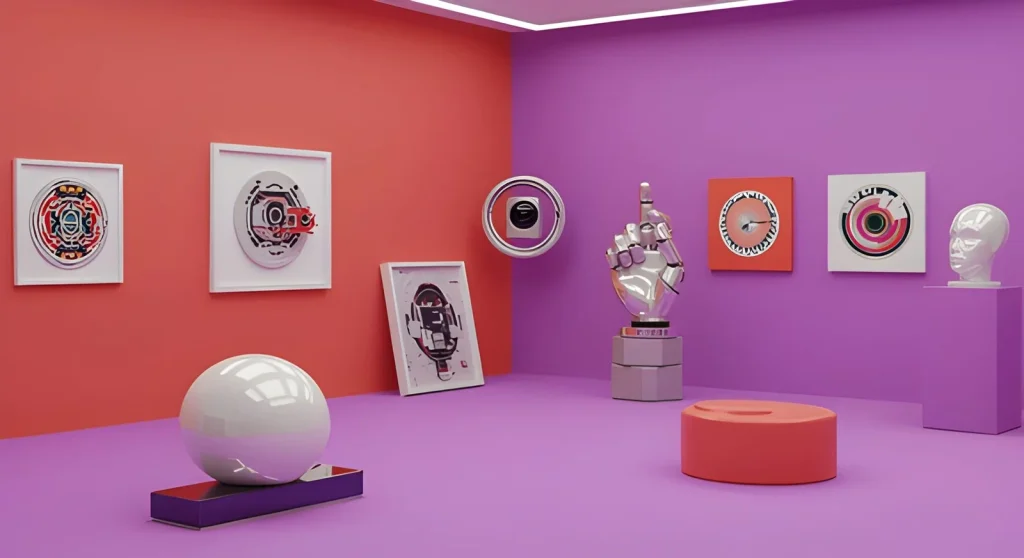
There was a time when styling a home meant choosing between two ends of a financial spectrum: spending thousands of dollars on original gallery pieces or filling your living room with mass-produced canvas prints from big-box retail stores. While the latter made art accessible, it came at the cost of individuality. Walk into three different apartments in any major city, and you were almost guaranteed to see the same desaturated coastal landscape or generic typography quote hanging above the sofa.
Today, interior design is undergoing a quiet revolution. As technology becomes deeply woven into how we construct and personalize our living spaces, homeowners, renters, and interior designers are seeking ways to make home decor feel deeply personal, contextual, and dynamic.
Enter the era of Smart Wall Art.
Powered by advances in generative art, intelligent display hardware, and accessible creation platforms, AI tools are redefining how we think about home aesthetics. No longer passive spectators browsing pre-made catalogs, homeowners can now act as creative directors of their own living spaces.
From Mass Production to Hyper-Personalized Decor
The fundamental appeal of home decor has always been self-expression. Our living spaces serve as visual extensions of our values, memories, and personal taste. However, finding artwork that precisely matches a room’s color scheme, lighting conditions, architectural scale, and emotional tone has historically been a challenge.
Generative AI bridges this gap by introducing hyper-personalization to interior design. Rather than searching endlessly for a print that happen to feature navy blue, brushed brass, and a specific architectural motif, homeowners can generate high-resolution art tailor-made for their specific room.
This shift changes the relationship between technology and interior design:
- Contextual Harmony: Art can be crafted to mirror exact accent colors in rug weaves, throw pillows, or wall paint tones.
- Emotional Resonance: Wall art can reflect family heritage, favorite literary quotes, local geography, or personal milestones rather than abstract, impersonal graphics.
- Evolving Spaces: As living rooms transition from daytime work environments to relaxed evening sanctuaries, digital smart displays can rotate AI artwork calibrated to match the ambient mood.
The Rise of Kinetic and Tactile Typography in Home Design
Words have always had a place in interior decoration. From vintage neon signs in industrial lofts to engraved wooden plaques in rustic kitchens, letterform art offers a direct way to set the mood of a room. However, standard graphic design quotes printed in flat, two-dimensional fonts can quickly feel sterile or outdated.
Modern smart wall art elevates textual decor by treating typography not merely as text, but as a three-dimensional sculpture crafted from light, texture, and physical material.
Elevating Words into Visual Sculptures
Imagine a quiet reading nook featuring an oversized print of a single inspirational word or philosophical excerpt. In traditional design, that print might feature plain black sans-serif lettering on a cream background.
Through generative styling, however, those same letters can take on realistic physical characteristics that interact with the room’s atmosphere:
- Organic Textures: Typography styled to look as if it were sculpted from weathered teak wood, moss-covered stone, or hand-hammered copper for biophilic and bohemian spaces.
- Luminous Surfaces: Letters rendered with liquid chrome finishes, warm glass refraction, or gentle neon glows that complement mid-century modern or contemporary aesthetic themes.
- Architectural Depth: Letterforms that cast soft shadows, giving the illusion of depth even when displayed on flat canvas or acrylic panels.
By utilizing intuitive creative software equipped with AI text effects, everyday decorators and digital artists can instantly transform simple text prompts into intricate, stylized lettering. By combining custom prompts—such as “brushed gold filigree,” “soft ambient watercolor smoke,” or “sculpted frosted glass”—creators can generate custom typography art that perfectly matches their room’s physical materials and color palette.
High-Tech Hardware Meets Fine Art Aesthetics
Creating stunning digital assets is only half of the smart wall art equation. The second half is how those assets are brought into physical living spaces.
The convergence of artificial intelligence and advanced display hardware has solved one of the biggest traditional drawbacks of digital art: the unnatural glare and blue-light emission of standard screens.
1. Matte Digital Canvas Displays
Modern digital frames—such as Samsung’s The Frame, Netgear’s Meural, or dedicated smart canvas displays—utilize anti-reflective, matte-finish screens that mimic the texture and light absorption of real paper or painted canvas. When displaying an AI-generated artwork, these displays adjust their brightness automatically using ambient light sensors, making digital prints look entirely natural in full daylight or dim evening illumination.
2. High-Definition Fine Art Prints
For those who prefer traditional non-digital wall displays, AI art tools now produce resolution files capable of large-format printing. Homeowners can generate a custom visual, send the file to a specialized print maker, and receive gallery-grade prints on premium materials:
- Giclée Archival Paper: Ideal for soft, watercolor-inspired AI art and delicate line work.
- Brushed Aluminum & Acrylic Mounts: Ideal for high-contrast metallic typography, abstract geometric art, and vibrant photographic renders.
- Stretched Cotton Canvas: Brings a classic, tactile painterly feel to generative oil-style portraits or textured quote prints.
Designing for Different Aesthetic Styles
One of the greatest strengths of AI-powered wall art is its versatility across diverse interior design styles. Here is how homeowners can leverage smart art generation across three popular modern decor themes:
Minimalist & Japandi Aesthetics
Japandi design emphasizes minimalism, natural textures, clean lines, and neutral tones.
- Art Concept: Abstract brushstroke motifs, subtle stone-textured typography, or muted botanical silhouettes.
- Palette: Warm taupe, soft sage green, off-white, and charcoal.
- Tip: Keep visual noise low by generating artwork with generous negative space and subtle tactile textures, like raw clay or hand-pressed paper.
Industrial Modern & Urban Loft Style
Industrial spaces thrive on raw materials, exposed brick, dark metals, and high contrast.
- Art Concept: Bold typographic statements with rusted iron or glowing neon textures, architectural blueprints, or abstract geometric light studies.
- Palette: Matte black, copper, exposed steel gray, and electric amber.
- Tip: Pair high-contrast, metallic text artwork with reclaimed wood frames to balance cold tech with warm organic elements.
Vibrant Maximalism & Eclectic Interiors
Maximalist decor embraces rich color, layered patterns, and bold creative risk-taking.
- Art Concept: Surreal botanical scenes, rich velvet-textured quote prints, or multi-layered digital collage art.
- Palette: Deep emerald green, royal cobalt, burnt terracotta, and gold.
- Tip: Mix dynamic AI-generated text pieces alongside vintage oil paintings and framed photography on a gallery wall for an eclectic, curated feel.
Step-by-Step: How to Curate Your Own Smart Wall Art Piece
If you are ready to experiment with smart art in your home, here is a practical workflow to bring your concept from vision to wall display:
- Audit Your Room’s Spatial Characteristics: Take note of your room’s dominant colors, wall dimensions, and natural light sources. Determine whether you are creating a focal centerpiece or a supporting accent piece.
- Define Your Concept or Text Motif: Decide whether your art will be visual (abstract, landscape, architectural) or typographic (a family phrase, favorite word, or coordinating motif).
- Generate and Style Your Artwork: Use specialized generative engines to refine the artwork. Experiment with textures, lighting directions, and materials until the visual weight feels balanced.
- Test Scale and Framing: Before printing, mock up the image size using paper on your wall or digital preview tools. Ensure the frame color harmonizes with existing furniture or hardware accents in the room.
- Set the Mood with Lighting: Position adjustable picture lights or smart spotlighting above your print or digital display to highlight subtle surface textures and bring out rich visual detail.
Conclusion: The Future of Living Spaces
Smart wall art is far more than a passing tech trend; it represents a fundamental evolution in how we inhabit and style our spaces. By placing intuitive generative tools into the hands of homeowners, AI demystifies the creative process and makes truly bespoke interior design available to everyone.
As artificial intelligence tools continue to refine their rendering capabilities and smart display technologies become indistinguishable from traditional canvas, the boundaries between technology, art, and home design will continue to blur.
In this new landscape, your home is no longer just a place where you hang someone else’s art—it becomes a dynamic canvas for your own evolving story.Read more at https://myflashyhome.net/.