

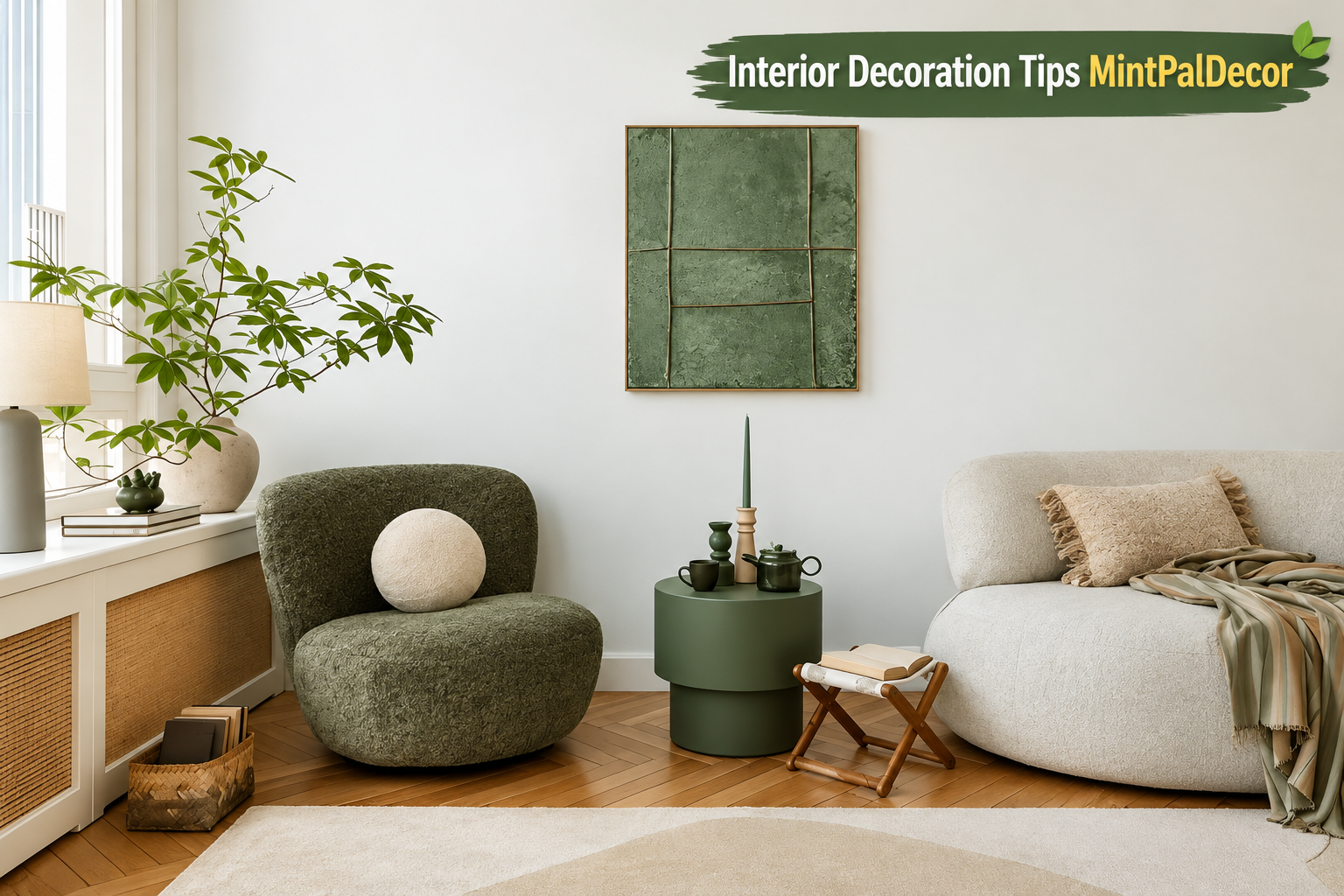
A home looks expensive when its parts agree with each other. That is the whole secret, and it costs less than most people expect. A modest sofa in a calm room with good lighting reads as pricier than a luxury sofa surrounded by clutter and harsh bulbs.
These interior decoration tips follow the way we plan rooms at MintPalDecor. Fix the big visual problems first, then spend small amounts where the eye actually lands. Nothing here needs a renovation. You need a tape measure, a free weekend, and a willingness to remove a few things.
Below are 11 steps in the order we would do them. After that you will find a table showing cost and time for each step, a comparison of cheap-looking versus expensive-looking choices, the mistakes that undo good work, and answers to common questions. Short on time? Read the answer box and the first table, pick one step, and start there.
What Makes a Home Look Expensive?
A home looks expensive when it has a controlled color palette, layered lighting, correctly sized furniture and rugs, and clear surfaces. Quality materials help, but consistency matters more. Designers notice repetition of color, finish, and scale first, and price tags second.
11 Interior Decoration Tips You Can Use in Any Room
1. Limit your palette to three colors
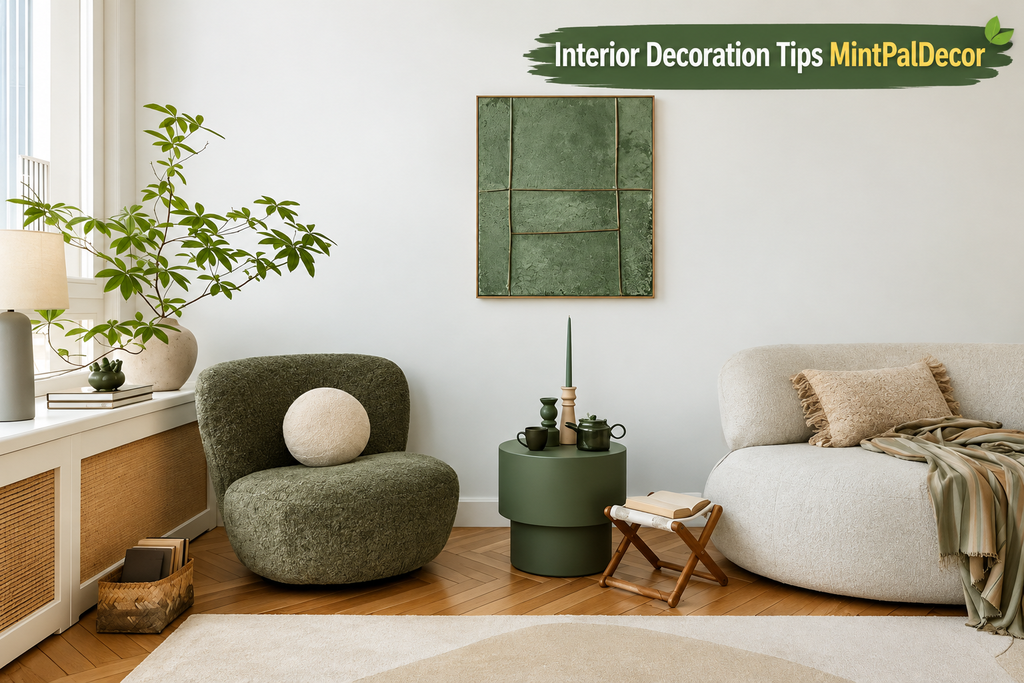
Pick one dominant color, one secondary, and one accent. The classic 60-30-10 split works: 60% walls and large furniture, 30% upholstery and drapes, 10% accents. Repeating the same few colors from room to room is what makes a house feel planned. Professional interior design work leans on this rule more than any other.
2. Choose matte or eggshell paint
Glossy walls show every roller mark and patch. A flat-matte or eggshell finish hides flaws and makes color look deeper. If budget allows only one project, repaint the most-seen room.
3. Hang curtains high and wide
Mount the rod a few inches above the window frame, or close to the ceiling. Extend it 8 to 12 inches past each side so the glass stays uncovered. Let panels just graze the floor. Short curtains on a tight rod are one of the fastest ways to make a room look cheap.
4. Layer three kinds of light
One ceiling fixture flattens a room. Combine ambient light (ceiling or sconces), task light (reading lamps), and accent light (a picture light or small lamp on a shelf). Use warm bulbs rated 2700K to 3000K and add dimmers where you can.
5. Buy a bigger rug
Small rugs make furniture look like it is floating. In a living room, at least the front legs of every seat should sit on the rug. An 8 by 10 foot size suits most sofa groupings.
6. Hang art lower and larger
Galleries center artwork at roughly 57 inches from the floor, and the same rule works at home. One large piece beats six small frames scattered on a wall. Over a sofa, aim for about two-thirds of the sofa’s width.
7. Clear your surfaces
Leave parts of every shelf, console, and counter empty. Group items in odd numbers, vary heights, and give each cluster breathing room. Expensive rooms rarely look full.
8. Mix textures, not patterns
Combine linen, wool, wood, glass, and one metal. Texture adds depth without the visual noise of competing prints. Stay with a single metal finish, such as brushed brass, across the room. If you wonder why interior design is interesting, this is a good example: small material choices change how a whole space feels.
9. Upgrade the hardware
Swap builder-grade cabinet pulls, door handles, and switch plates for solid, weighty ones in a matching finish. Lift a handle in a shop and you will feel the difference. Guests feel it too.
10. Add one oversized plant
A single large plant, such as a fiddle-leaf fig or olive tree in a good pot, does more than five tiny succulents. Real greenery adds height and softness. Fake ones work only if they are large and dusted.
11. Hide the visual noise
Cords, remotes, chargers, and open storage bins make a room look busy. Use cable clips, lidded baskets, and closed cabinets. We find this is the step people skip, and the one they notice most afterward.
Interior Decoration Tips at a Glance: Cost, Time, and Impact
| Tip | Typical cost | Time needed | Visual impact |
| Limit palette | Low | 1 day | High |
| Eggshell paint | Medium | 1 to 2 days | High |
| High, wide curtains | Medium | 2 hours | High |
| Layered lighting | Low to medium | 1 hour | High |
| Larger rug | Medium to high | 30 minutes | High |
| Larger art, hung lower | Low to medium | 1 hour | Medium |
| Clear surfaces | Free | 1 hour | Medium |
| Mixed textures | Low | 1 hour | Medium |
| New hardware | Low | 2 to 4 hours | Medium |
| One large plant | Low to medium | 30 minutes | Medium |
| Hide cords and clutter | Low | 1 hour | Medium |
Cheap-Looking vs. Expensive-Looking Choices
| Element | Reads as cheap | Reads as expensive |
| Curtains | Short, hung at the window edge | Floor-length, hung high |
| Rug | Small, floating mid-room | Large, anchoring the seating |
| Lighting | One bright overhead bulb | Several warm, dimmable sources |
| Art | Many small frames | One large piece, or a tight grid |
| Colors | Five or more competing hues | Three repeated tones |
| Surfaces | Full of small objects | Edited, grouped, with space |
Mistakes That Undo Good Interior Decoration Tips
These four slip-ups cancel out the work above. For a longer list, see our guide to home decor mistakes.
- Matching everything. A matching furniture set looks showroom-flat. Mix pieces within one palette.
- Buying for the empty room. Measure first and tape furniture outlines on the floor.
- Cool white bulbs in living spaces. They make warm paint look gray and tired.
- Decorating every wall. Leave one calm wall so the eye can rest.
FAQ
Which interior decoration tips give the biggest result for the least money?
Rearranging surfaces, switching to warm bulbs, and hiding cords cost almost nothing and change a room fast. Hanging curtains higher costs only a new rod and brackets.
How can I make a rented home look expensive?
Focus on what you can remove later: lamps, curtains, a large rug, art leaned on shelves, and peel-and-stick hardware covers. Skip anything that needs drilling or repainting.
Does expensive-looking decor need expensive furniture?
No. Scale, spacing, and lighting matter more. A secondhand solid-wood piece in a well-lit, uncluttered room looks better than a pricey item in a crowded one.
Where should I start?
Start with the room guests see first. Fix lighting and curtains, then rug size, then art height.
Final Word
You do not need a renovation to make a home look expensive. You need fewer colors, better light, correct sizes, and less visual noise. Start with one room, apply these interior decoration tips in order, and judge the result by how calm the space feels. For more room-by-room Decoration tips, keep an eye on myflashyhome’s new guides.
[…] you’re planning a room refresh, these interior decoration tips can help you bring your new finds […]