

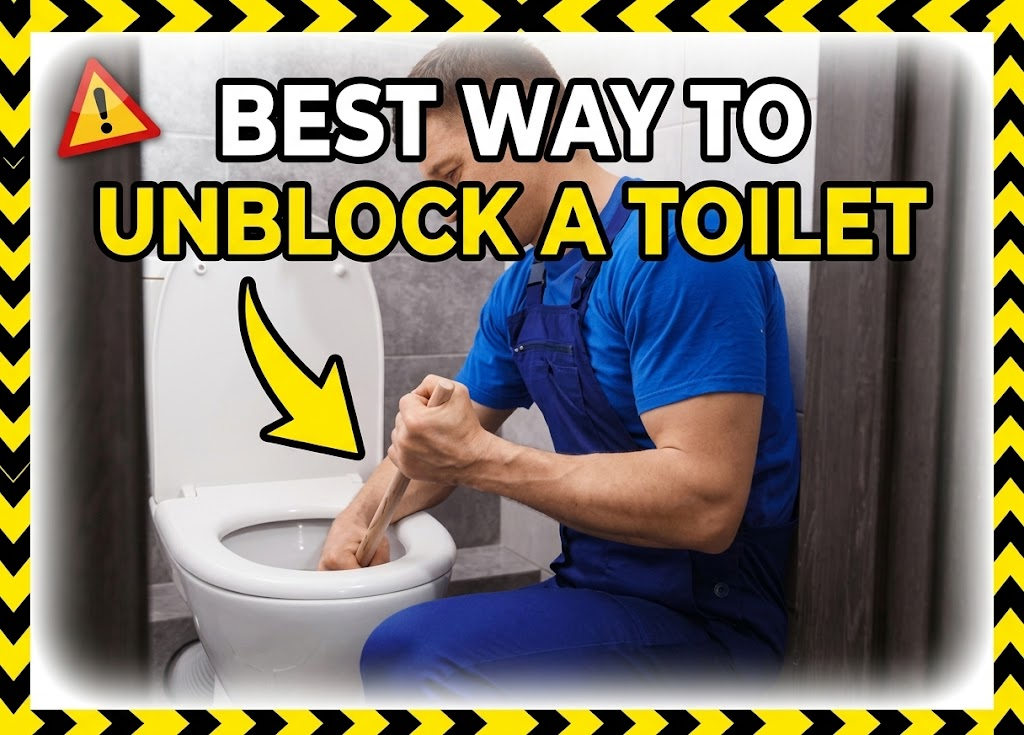
The water rises, hesitates, and you stand there deciding whether to flush again. Don’t. A second flush on a blocked bowl is how a bad morning turns into a wet bathroom floor.
Most toilet clogs sit in the first few inches of the trap, the curved channel built into the bowl. That is good news, because a clog that close to the surface rarely needs a plumber. It needs the right tool used the right way. The best way to unblock a toilet depends on what caused the clog and how deep it sits, and reaching for chemicals or a coat hanger first usually makes things worse.
This guide covers seven fixes in the order worth trying them, from a pot of hot water to a closet auger, plus a table to match each method to your situation. You will also learn what never to flush, when the problem is bigger than one bowl, and how to stop it coming back. Grab rubber gloves and a few old towels before you start.
What Is the Best Way to Unblock a Toilet?
For most clogs, the best way to unblock a toilet is a flange plunger used with firm, steady pressure for 15 to 20 seconds. If that fails, a closet auger reaches deeper blockages. For soft, paper-based clogs, hot water and dish soap is the gentlest place to start.
Which Fix Matches Your Clog?
| Fix | Best for | Time | Difficulty |
|---|---|---|---|
| Hot water and dish soap | Paper clogs, slow flush | 20 to 30 min | Easy |
| Flange plunger | Most common clogs | 5 to 10 min | Easy |
| Baking soda and vinegar | Light, partial clogs | 30 min | Easy |
| Closet auger | Deep or stubborn clogs | 10 to 15 min | Moderate |
| Wet/dry vacuum | Lodged objects, failed plunging | 15 min | Moderate |
| Enzyme cleaner | Recurring slow drains | Overnight | Easy |
| Licensed plumber | Multiple fixtures backing up | Varies | None |
7 Proven Ways to Clear a Blocked Toilet
1. Hot Water and Dish Soap
Add a quarter cup of dish soap to the bowl, then pour in a gallon of hot tap water from about waist height. Use hot, not boiling, since boiling water can crack porcelain. Give it 20 to 30 minutes.
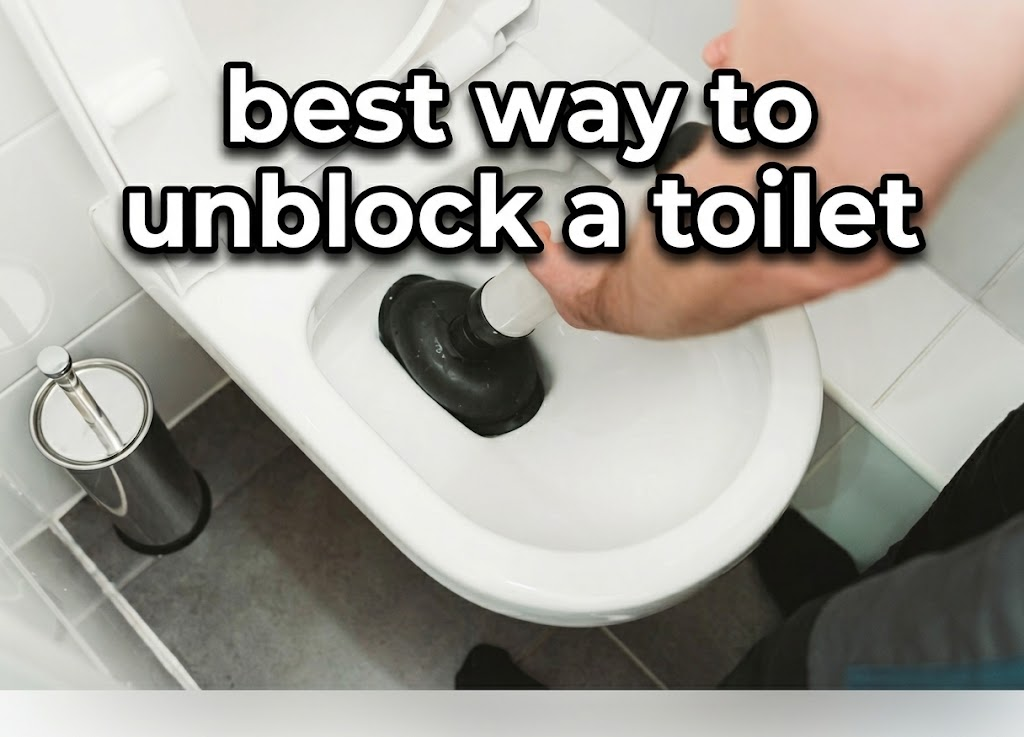
2. Flange Plunger
A flange plunger has an extra rubber flap that fits the drain opening. A flat sink plunger will not seal. Cover the cup with water, push in gently to release trapped air, then pump hard 15 to 20 times and pull up sharply on the last stroke.
3. Baking Soda and Vinegar
Pour in one cup of baking soda, then slowly add two cups of vinegar. Wait 30 minutes and flush with hot water. This helps with light clogs but struggles against a solid blockage, so treat it as a mild option. Never combine it with bleach products.
4. Closet Auger
A closet auger has a curved shaft and a protective sleeve that keeps the metal off the porcelain. Feed it into the drain until you meet resistance, turn the handle clockwise, then pull it back and flush.
5. Wet/Dry Vacuum
Switch to liquid mode and remove the standing water first. Wrap a rag around the hose end, press it firmly into the drain opening, and run the vacuum so suction pulls the clog out. Small lodged objects often come free this way.
6. Enzyme Cleaner
Enzyme products digest organic waste slowly, which makes them gentle on pipes. Pour the dose in at bedtime and leave it overnight. They suit slow drains, not solid blockages.
7. Check the Bigger Picture
If the tub gurgles or another drain backs up when you flush, the blockage sits further down the line or the vent is blocked. Stop plunging and call a licensed plumber. Skip caustic chemical openers, which can damage pipes and splash back at you.
What Not to Flush
| Item | Why it clogs |
|---|---|
| “Flushable” wipes | Many do not break down like toilet paper |
| Paper towels | Stay thick and tangle in the trap |
| Cotton swabs and floss | Snag on rough pipe edges |
| Cat litter | Clumps and hardens |
| Cooking grease | Cools and coats the pipe wall |
How to Prevent the Next Clog
Flush only toilet paper and human waste, and use less paper per flush. US toilets are limited to 1.6 gallons per flush, and EPA WaterSense models use 1.28 or less, so the bowl has little water to spare for bulky loads. Treat a slow flush as an early warning, and add the toilet to your seasonal home maintainance checklist next to the shutoff valve and fill valve.
FAQ
Can I unblock a toilet without a plunger? Yes. Hot water with dish soap or baking soda with vinegar can clear mild clogs. A wet/dry vacuum or closet auger handles tougher ones.
How long should dish soap and hot water sit? About 20 to 30 minutes. If the water level has not dropped by then, move to a plunger.
Is chemical drain cleaner safe in a toilet? It is not recommended. Caustic products can harm seals and pipes, and they make later plunging unsafe.
Why does my toilet keep clogging? Common causes are too much paper, wipes, a partial blockage in the line, or a blocked vent. Repeat clogs deserve a plumber’s inspection.
Final Thoughts
The best way to unblock a toilet is the least aggressive method that works. Start with soap and hot water, move to a flange plunger, and bring in the auger or vacuum only if needed. When other drains join in, stop and call a pro. For more household upkeep guides, visit http://myflashyhome.net/.