

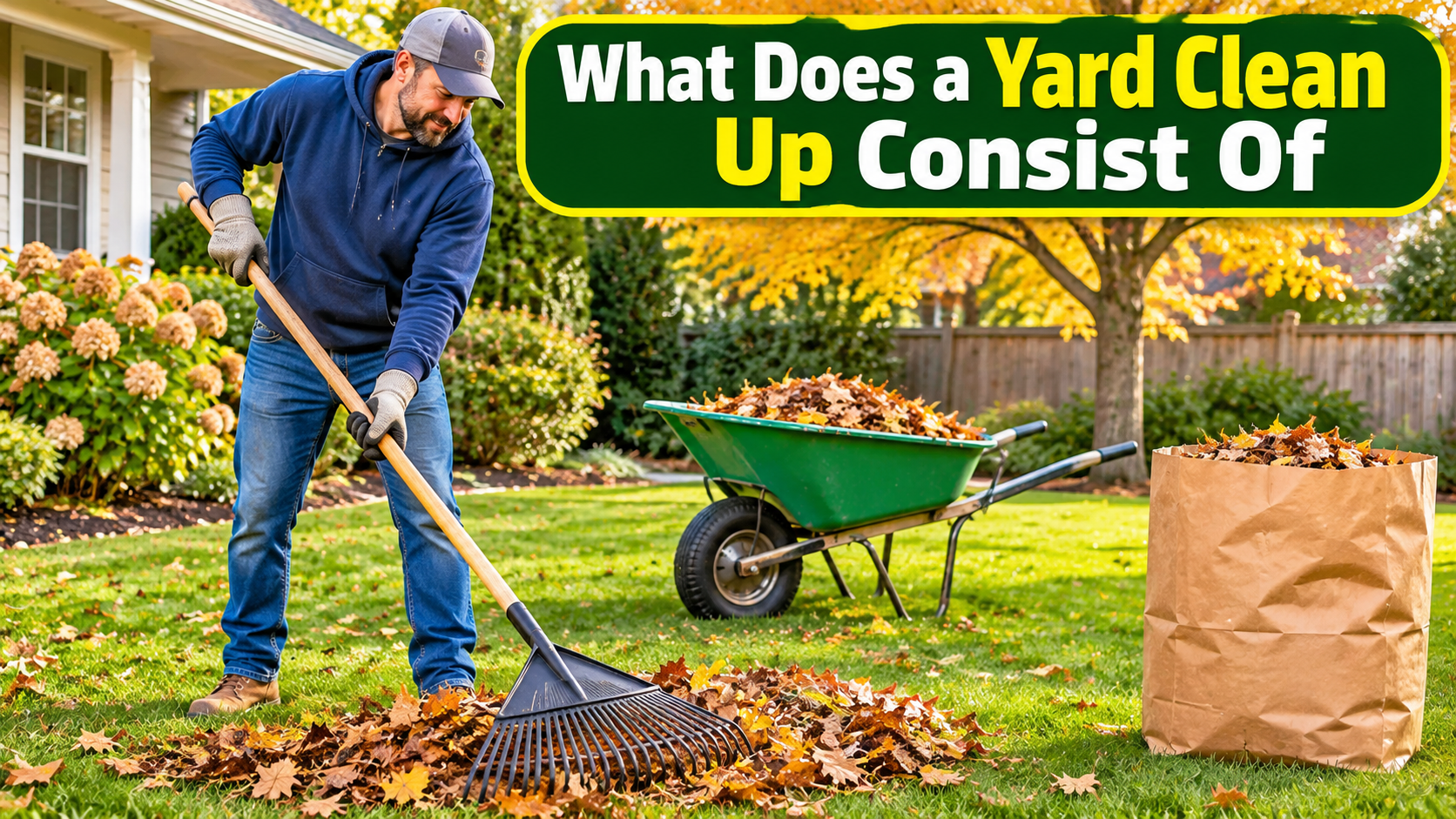
You step outside in March and the yard looks like it lost a fight with winter. Flattened leaves cling to the beds, branches litter the lawn, and the patio wears a layer of grit nobody invited. So what does a yard clean up consist of, exactly? In short: debris removal, bed and lawn tidying, pruning, edging, and hauling everything away. The longer answer depends on your season, your lot size, and how long the mess has been sitting there.
Most homeowners guess at the scope. Some underdo it. Others burn a whole weekend on jobs that could have waited. This guide covers the ten tasks that make up a proper cleanup, gives realistic time estimates for an average quarter-acre lot, and shows what to tackle first when time is short. You will also find a seasonal table, a DIY versus hired comparison, and answers to the questions people ask most. Work through the list in order and the yard will be ready for mowing, planting, or company.
What Does a Yard Clean Up Consist Of? The Quick Answer
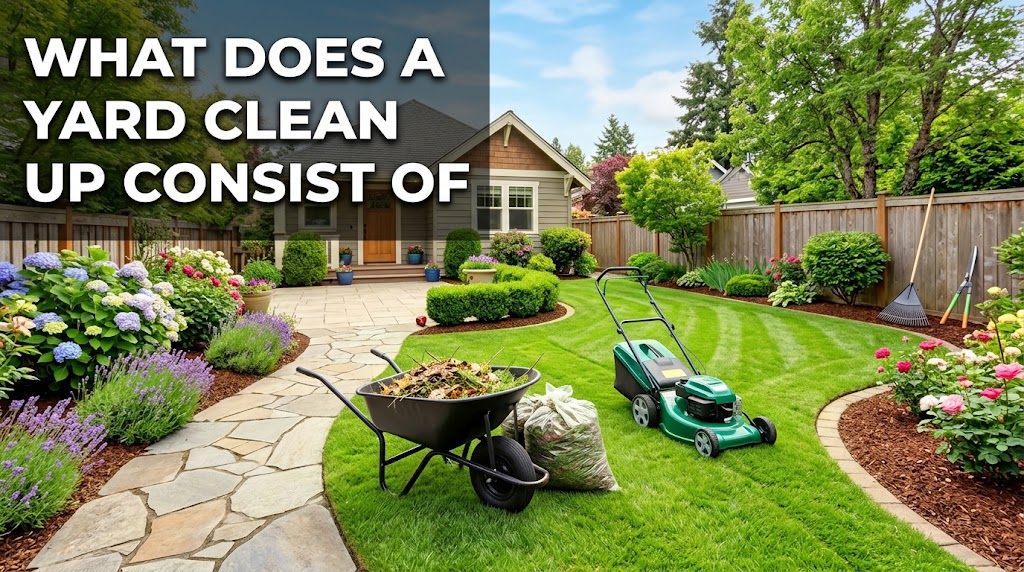
A yard clean up consists of clearing leaves, fallen branches, weeds, and trash; trimming shrubs and dead plant growth; edging lawns and beds; refreshing mulch; cleaning hard surfaces and gutters; and disposing of all waste properly. Most cleanups take one to two days for a typical suburban lot.
The 10 Essential Tasks
| # | Task | Typical time (quarter-acre) | Best season |
|---|---|---|---|
| 1 | Walk the yard and make a plan | 15 minutes | Any |
| 2 | Pick up trash, sticks, and stray objects | 30 to 45 minutes | Spring |
| 3 | Remove leaves and fallen debris | 1 to 3 hours | Fall, spring |
| 4 | Pull weeds | 1 to 2 hours | Spring, early summer |
| 5 | Cut back dead growth and prune | 1 to 3 hours | Late winter, fall |
| 6 | Edge lawn and bed borders | 45 minutes | Spring |
| 7 | Refresh mulch | 2 to 4 hours | Spring |
| 8 | Clean gutters, patios, and walkways | 1 to 2 hours | Spring, fall |
| 9 | Aerate, dethatch, or overseed if needed | 2 to 4 hours | Early fall |
| 10 | Bag, haul, or compost everything | 1 to 2 hours | Any |
These are my working estimates from typical residential jobs. A sloped or heavily wooded lot will run longer.
1. Walk the Yard First
Skip this and you will do things twice. Walk the whole property with a notepad. Note dead limbs, bare spots, drainage puddles, and anything leaning. Ten minutes of looking saves an hour of backtracking.
2. Clear Trash and Loose Objects
Pick up sticks, wind-blown litter, kids’ toys, and broken pots before you rake or mow. Anything hard left in the grass can turn into a projectile under a mower blade.
3. Remove Leaves and Debris
This is the task most people picture when they ask what does a yard clean up consist of. Rake or blow leaves off the lawn first, then out of beds and corners. A thick, wet mat of leaves smothers grass and traps moisture against plant crowns. Thin layers can be mulched with the mower and left behind.
4. Pull Weeds Before They Seed
Weed after rain, when roots slide out of soft soil. Get the whole root on dandelions and thistle. Weeds already flowering should go in the trash, not the compost pile, or they will return next year.
5. Cut Back Dead Growth and Prune
Trim dead perennial stalks and broken branches. Most shrubs that bloom in summer can be pruned in late winter, while spring bloomers such as lilacs should wait until after flowering. Oaks are the exception worth remembering: many state forestry agencies advise pruning them in the dormant season to lower the risk of oak wilt.
6. Edge Lawns and Beds
A crisp edge is the cheapest upgrade in landscaping. A flat spade or half-moon edger cuts a clean line where turf meets bed. It makes the whole yard look maintained even if the rest is average.
7. Refresh the Mulch
Aim for two to three inches of mulch. Keep it a few inches back from tree trunks and stems, because piling it against bark invites rot and pests. Skip the “mulch volcano” look.
8. Clean Gutters and Hard Surfaces
Gutters belong on the list because clogged ones dump water along your foundation and beds. Sweep patios and walkways, then pressure wash or scrub off moss and algae. Slippery stone is a fall waiting to happen.
9. Aerate, Dethatch, or Overseed
Not every cleanup needs this step. Check thatch by cutting a small plug of turf. If the spongy brown layer is thicker than about half an inch, dethatching helps. In cool-season lawns across the northern half of the US, early fall is the right window for aeration and overseeding.
10. Dispose of Everything Properly
The EPA estimates yard trimmings make up roughly 12 percent of municipal solid waste, and many US municipalities ban them from landfills. Check your city’s rules for paper yard waste bags, curbside pickup dates, or drop-off sites. Compost soft leaves and grass clippings. Chip or haul woody branches.
What Does a Yard Clean Up Consist Of in Each Season?
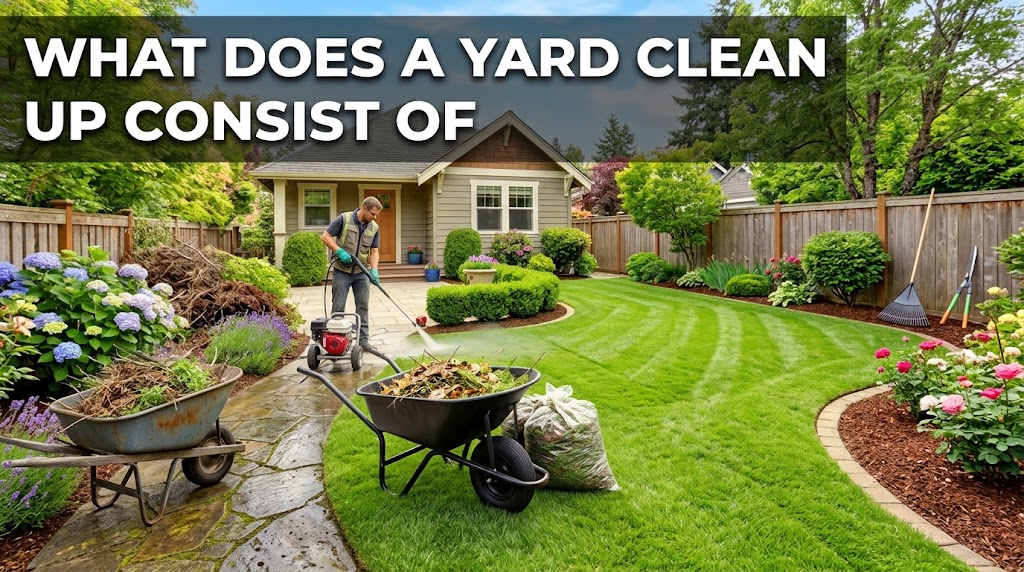
The answer changes with the calendar. The same property needs different work in April than in November.
| Season | Main focus | Skip for now |
|---|---|---|
| Spring | Debris, weeds, edging, mulch, gutters | Heavy pruning of spring bloomers |
| Summer | Light weeding, deadheading, watering checks | Major pruning, overseeding |
| Fall | Leaf removal, aeration, overseeding, gutter cleaning | Fertilizing late in the season |
| Winter | Storm debris, dormant pruning, tool maintenance | Digging in frozen ground |
Before any digging project during cleanup, such as removing a stump or setting new posts, call 811. It is the free national line that gets buried utilities marked, and it is required in most states.
DIY or Hire a Pro?
| Factor | DIY | Hired crew |
|---|---|---|
| Cost | Tool rental, bags, mulch | Typically billed per job or per hour, varies by region |
| Time | A weekend for most lots | Often a few hours |
| Best for | Small to mid-size yards, light debris | Large lots, storm damage, tall trees |
| Risk | Back strain, ladder falls, chainsaw injury | Low, if the company carries insurance |
Anything that needs a ladder near power lines or a chainsaw above shoulder height should go to a licensed, insured arborist. Ask for proof of insurance before the work begins. No leaf pile is worth an emergency room visit.
A Simple Order of Work
If you only have one afternoon, follow this sequence: trash pickup, leaves, weeds, pruning, edging, mulch, then a final sweep of hard surfaces. Going top to bottom and dirty to clean means you never rake the same spot twice. This is also the answer to what does a yard clean up consist of when your time is limited: the first four steps make the biggest visible difference.
FAQ
What does a yard clean up consist of for a basic job?
A basic job covers debris and leaf removal, weeding, light pruning, edging, and hauling away waste. Mulching and aeration are add-ons.
How long does a yard clean up take?
Most average suburban yards need one to two days. Small townhouse yards can finish in a morning.
How much does a professional yard clean up cost?
Prices vary widely by region, lot size, and debris volume. Get at least two written quotes and ask what disposal fees are included.
Should I clean up the yard in spring or fall?
Both. Fall cleanup protects the lawn and beds from winter smothering. Spring cleanup resets the yard for growth. Skipping fall makes spring much harder.
Can I leave leaves on the lawn?
A thin layer chopped by the mower is fine. A thick, wet mat should be removed so the grass underneath can breathe.
Final Thoughts
A good yard clean up is less about effort and more about order. Plan the walk-through, clear the mess, cut back what is dead, define the edges, and dispose of waste the way your town requires. Once you understand what does a yard clean up consist of, the job stops feeling endless and starts feeling like a checklist you can finish.