

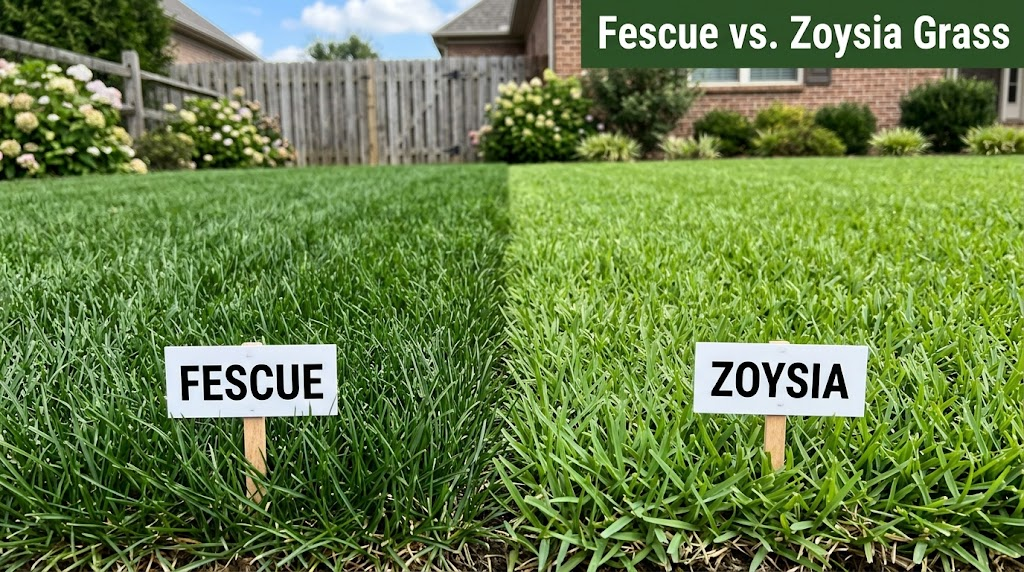
Pick the wrong grass and you will feel it every summer. Tall fescue looks lush in April, then sulks when July hits 95 degrees. Zoysia shrugs off that heat, but it turns straw brown after the first hard frost and takes its time greening up in spring. That tradeoff sits at the center of the fescue vs zoysia decision, and it matters more than any label on a seed bag.
This guide compares the two grasses on climate, shade, water, mowing, wear, and cost. It draws on turf guidance from Virginia Cooperative Extension, Kansas State University, and the University of Maryland Extension. You get a quick answer first, then tables you can screenshot for the garden center, a region-by-region breakdown for the US, and answers to the questions homeowners ask most.
Neither grass wins everywhere. A lawn in Raleigh, one in Minneapolis, and one in Phoenix each want something different. By the end, you should know which side of the fescue vs zoysia choice fits your yard, your budget, and your weekends.
Fescue vs Zoysia: The Short Answer
Choose tall fescue if you live in a cool-season or transition-zone state, have shade, and want green grass for most of the year. Choose zoysia if you have hot summers, full sun, and can accept a brown winter lawn. Zoysia handles drought and mows low. Fescue greens earlier and handles shade better.
The split is simple. Zoysia is a warm-season grass that grows hardest in summer heat. Tall fescue is a cool-season grass that peaks in spring and fall. Nearly every other difference follows from that.
Fescue vs Zoysia Side by Side
| Factor | Tall Fescue | Zoysia |
|---|---|---|
| Grass type | Cool-season | Warm-season |
| Best growing weather | Cooler spring and fall days | Hot summer days |
| Winter color | Stays green in mild winters | Goes dormant and brown |
| Mowing height | 3 to 4 inches | About 1 to 2 inches |
| Shade tolerance | Good to excellent | Moderate to good |
| Drought tolerance | Good, with deep roots | Excellent |
| Wear recovery | Fair, needs overseeding | Slow to spread, dense once established |
| Annual nitrogen | Roughly 2 to 4 lbs per 1,000 sq ft | About 2 lbs per 1,000 sq ft |
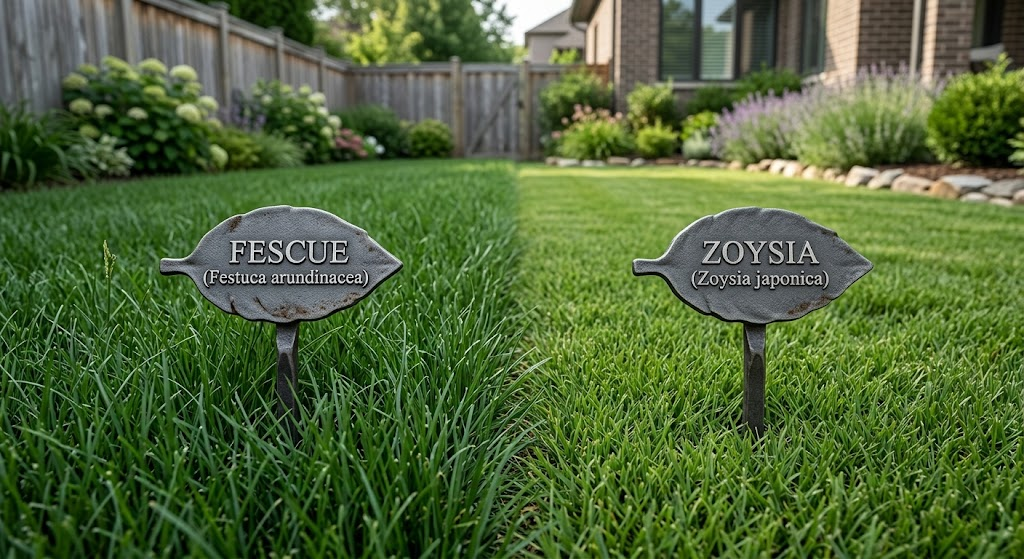
Look is the easiest way to tell them apart. Tall fescue has coarse, wide blades, so if you want a benchmark for finer cool-season turf, check what does kentucky bluegrass look like. Zoysia feels stiff and prickly underfoot, and a bermuda grass close up shows finer, wirier blades by comparison.
Which Grass Fits Your Climate?
| US Region | Better Pick | Why |
|---|---|---|
| Northern states | Fescue | Zoysia has a long dormancy and risks winter injury |
| Transition zone (Mid-Atlantic, Kansas, Missouri, Tennessee) | Either | Fescue suits shade, zoysia suits full sun |
| Deep South and Gulf Coast | Zoysia | Fescue struggles with humid heat and disease |
| Hot, dry Southwest | Zoysia with irrigation | Fescue declines in prolonged heat |
The transition zone is where this choice gets hard. Both grasses survive there, but neither is perfect. Tall fescue usually stays green longer and takes shade, though summer heat and fungal disease can thin it. Zoysia handles the heat, but you trade away winter color.
In the Deep South, bermuda also competes with zoysia. If a neighbor’s lawn looks similar and you are unsure which is which, a guide on what does bermuda grass look like clears it up quickly. Northern homeowners still choosing among cool-season species can compare kentucky bluegrass vs fescue vs ryegrass before buying seed.
Maintenance, Water, and Mowing
Water is where the fescue vs zoysia gap is widest. A Virginia municipal turf guide built on extension data lists tall fescue, bermuda, and zoysia among the most water-efficient lawn grasses because of their deep roots. In practice, zoysia holds color through dry spells with less help, while fescue needs steady irrigation in summer or it goes dormant.
Mowing differs just as much. Virginia Cooperative Extension recommends 3 to 4 inches for tall fescue and a much lower cut for zoysia. Follow the one-third rule on both, which means never removing more than a third of the blade height in one mowing. Zoysia’s tough leaves dull mower blades fast, so sharpen them every season.
Weeds behave differently too. University of Maryland Extension reports that correct mowing height can cut weeds and diseases by 50% to 80% in tall fescue lawns. Zoysia’s dense mat blocks weed seeds well once established. Before spraying anything, get comfortable with weeds vs grass identification, because crabgrass in a new fescue lawn is easy to misread.
Cost: Fescue vs Zoysia Over Five Years
These are ballpark US figures. Local prices vary, so get quotes before you commit.
| Cost Item | Tall Fescue | Zoysia |
|---|---|---|
| Seed and starter fertilizer | About $0.05 to $0.15 per sq ft | Seed is limited and slow to fill in |
| Sod installed | About $0.35 to $0.90 per sq ft | About $0.60 to $1.50 per sq ft |
| Ongoing upkeep | Fall overseeding, more summer water | Less water, sharper blades, thatch control |
| Mowing season | Spring through late fall | Summer, with a dormant break |
Fescue is cheaper to start. Zoysia often costs less to keep, especially in hot regions where fescue would need heavy irrigation and repair. If you plan to stay in the house five years or more, that long-term math can favor zoysia in the right climate.
When to Plant and How to Prepare
Plant tall fescue in early fall, when soil is warm and air is cool. Plant zoysia in late spring or early summer, once soil has warmed. Prep matters more than the grass you pick, so clear debris, remove old thatch, and fix grading before anything goes down. If you have never planned that stage, what does a yard clean up consist of covers the basics.
Do not seed both together. Kansas State research found that seeding zoysia and tall fescue at the same time in June gave a less uniform stand than seeding zoysia first and adding fescue that September. Mixed lawns also look patchy once zoysia browns in winter.
FAQ
Is zoysia better than fescue?
Not universally. Zoysia wins in hot, sunny regions where drought and heat are the main threats. Fescue wins in cooler climates and in shade.
Will zoysia choke out fescue?
In sunny or lightly shaded areas with hot summers and mild winters, it usually does. In moderate or deep shade, it generally does not.
Which stays green longer?
Tall fescue. Zoysia goes dormant and turns tan after frost, then greens up again in spring.
Which costs less in the long run?
Zoysia, in warm climates, because it needs less water and fewer repairs. Fescue costs less up front.
Bottom Line
Match the grass to your weather first, your shade second, and your budget third. Cool, shady, or northern yards lean fescue. Hot, sunny, drought-prone yards lean zoysia. That is the whole fescue vs zoysia call for most US homeowners.